
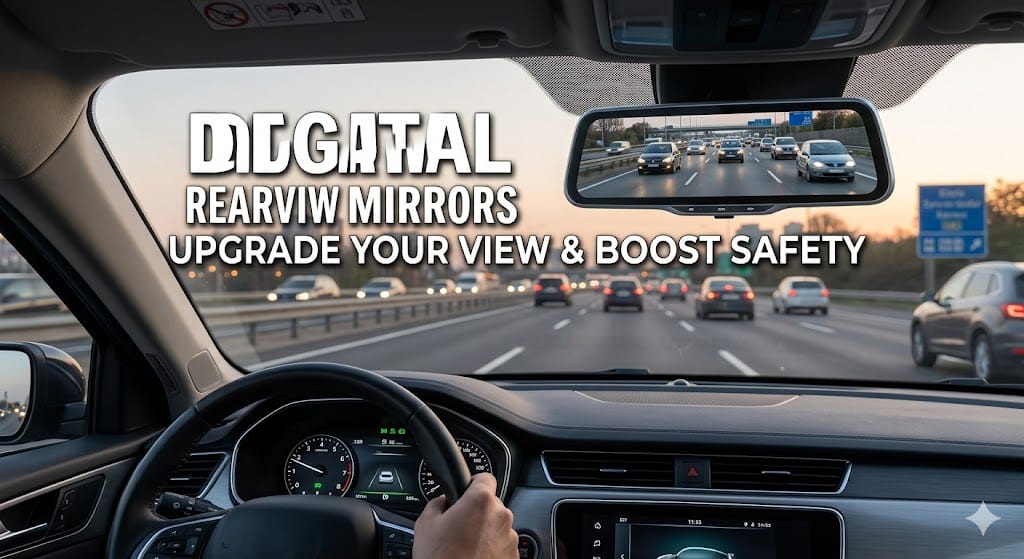
Digital Rearview Mirrors: No More Blocked Views
Have you ever packed your SUV for a camping trip or filled the back seat with passengers, only to realize you can no longer see anything out of your rearview mirror? It is a common safety hazard that drivers have dealt with for decades. Fortunately, a specific piece of technology called the Digital Rearview Mirror (sometimes called a Camera-Based Mirror) is solving this problem in modern vehicles like the Toyota RAV4, GMC Sierra, and various Nissan models.
What is a Digital Rearview Mirror?
At first glance, it looks like a standard glass mirror. However, with the flip of a switch, the glass transforms into a high-resolution LCD screen. This screen displays a live video feed from a camera mounted on the rear of the vehicle, usually near the spoiler or the license plate.
How to Use It
Using this feature is incredibly simple, but many new car owners don’t realize they have it. Here is how to operate it:
- The Toggle Switch: Look for a small tab at the bottom of the mirror (where you would usually flip the mirror to dim high-beam glare). Pulling this tab toward you typically activates the digital mode.
- Adjusting the View: Most digital mirrors have menu buttons on the bottom or side. These allow you to adjust the brightness, tilt the camera angle up or down, and even zoom in or out to suit your height and preference.
- Switching Back: If the digital screen feels distracting or if the camera lens is dirty, simply push the tab back to return to a traditional glass mirror.
Why This Feature Matters for Everyday Drivers
The digital rearview mirror isn’t just a fancy gadget; it solves three specific real-world problems:
- Eliminates Obstructions: Whether you have a tall passenger in the middle seat or a trunk full of moving boxes, the camera sees “through” them because it is mounted outside the car.
- Wider Field of Vision: Standard mirrors are limited by the size of your rear window. A digital mirror provides a much wider angle, significantly reducing your blind spots.
- Better Night Visibility: Most of these systems use low-light sensors that provide a clearer, brighter image at night than traditional glass, which can often look dark and grainy.
A Quick Maintenance Tip
If your digital mirror looks blurry or foggy, the culprit is usually a dirty camera lens. Since the camera is exposed to the elements, it can pick up road salt, mud, or raindrops. Most vehicles with this tech include a small washer jet for the camera, but a quick wipe with a soft cloth during your next gas station stop will keep your digital view crystal clear.
Next time you are car shopping or sitting in a newer rental, check the mirror. That little toggle switch might just change the way you see the road.