
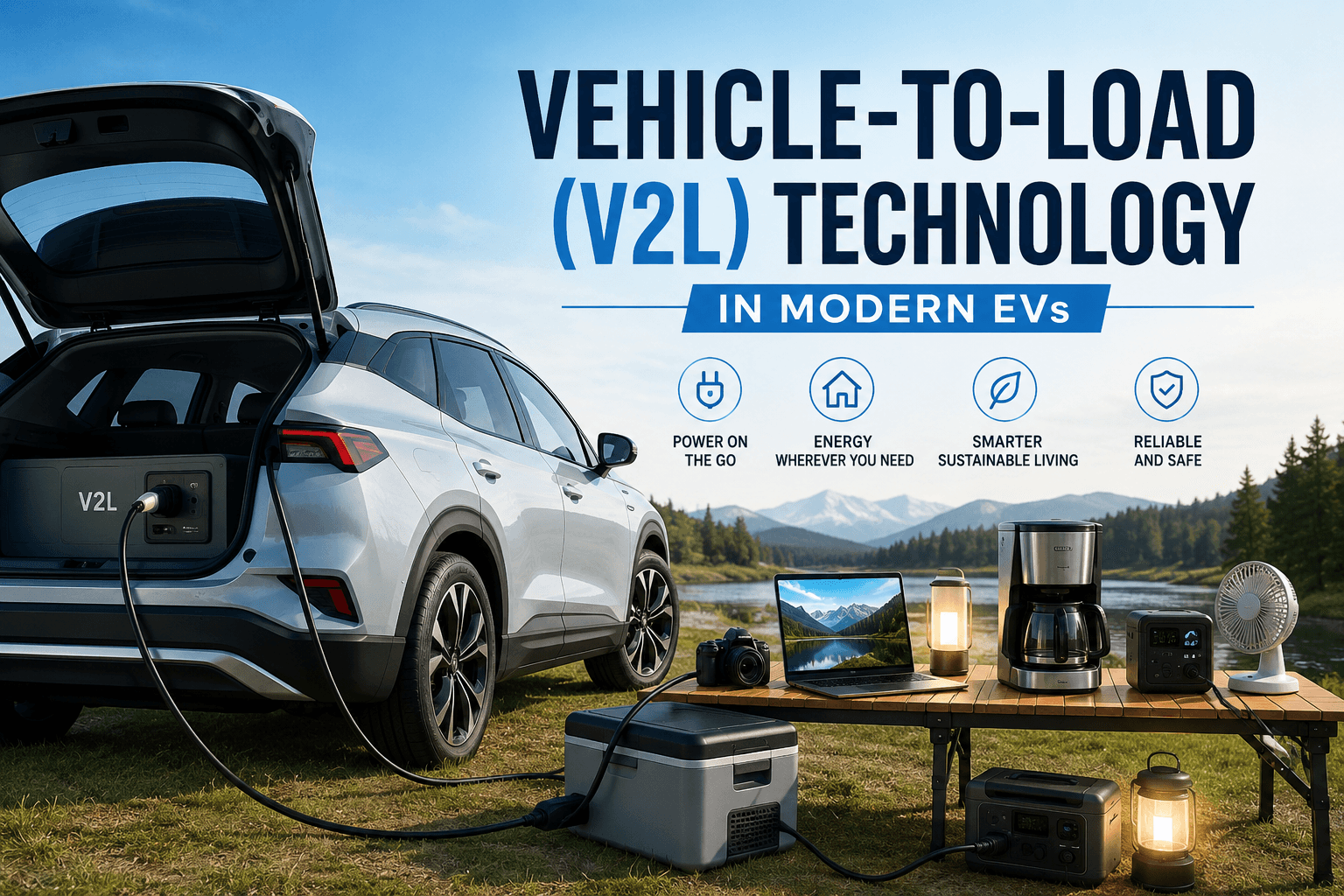
How to Use V2L: Turning Your Electric Car Into a Mobile Power Station
Imagine you’re camping in the middle of nowhere and want to brew a fresh pot of coffee, or a sudden storm knocks out your home’s power and your fridge is full of groceries. In the past, you’d need a loud, gas-guzzling generator. Today, if you own a modern electric vehicle (EV), you might already be sitting on the solution: Vehicle-to-Load (V2L) technology.
What is V2L?
Vehicle-to-Load, or V2L, is a feature found in many new electric cars—most notably the Hyundai IONIQ 5, Kia EV6, and Ford F-150 Lightning—that allows the vehicle to export its battery power to external devices. Instead of the battery only sending power to the wheels, it sends electricity to standard 120V or 240V outlets.
How to Use Your Car’s V2L Feature
Using V2L is surprisingly simple, but there are two main ways to access that power depending on your vehicle model:
1. Internal Cabin Outlets
Many V2L-equipped cars have a standard three-prong household outlet located under the rear seats or in the trunk. This is perfect for charging laptops, powering a small vacuum, or running a portable cooler while driving.
2. The External Charging Port Adapter
For high-power needs outside the car, you use a specific V2L adapter that plugs directly into your car’s exterior charging port. Once plugged in, the adapter provides a standard outlet where you can connect extension cords to power anything from electric grills to power tools.
Practical Ways to Use V2L
- Emergency Backup: During a blackout, you can run a refrigerator, a few lamps, and a Wi-Fi router for days without draining the car’s battery significantly.
- Elevated Camping: Skip the charcoal; plug in an induction cooktop, a projector for an outdoor movie, or even an electric blanket.
- Rescuing Other EVs: Some V2L systems allow you to provide a ‘trickle charge’ to another electric car that has run out of juice.
Safety and Battery Limits
A common concern is: ‘Will I strand myself by using all my battery power?’ The answer is no. Most manufacturers allow you to set a discharge limit (typically between 20% and 80%) via the infotainment screen. Once the car’s battery hits that level, the V2L system automatically shuts off, ensuring you always have enough range to drive home or to the nearest charger.
The Bottom Line
V2L is changing the way we think about car ownership. It’s no longer just a mode of transportation; it’s a high-capacity, mobile energy reserve. If you’re shopping for a new EV, checking for V2L capability is a must for anyone who values preparedness and outdoor adventure.