
Mastering One-Pedal Driving: How to Drive Smoother and Go Further
If you’ve recently purchased or test-driven a modern electric vehicle (EV) like a Tesla, Hyundai Ioniq 5, or Ford Mustang Mach-E, you’ve likely encountered a feature called One-Pedal Driving. While it sounds intimidating to new drivers, it is one of the most practical innovations in modern automotive technology.
What is One-Pedal Driving?
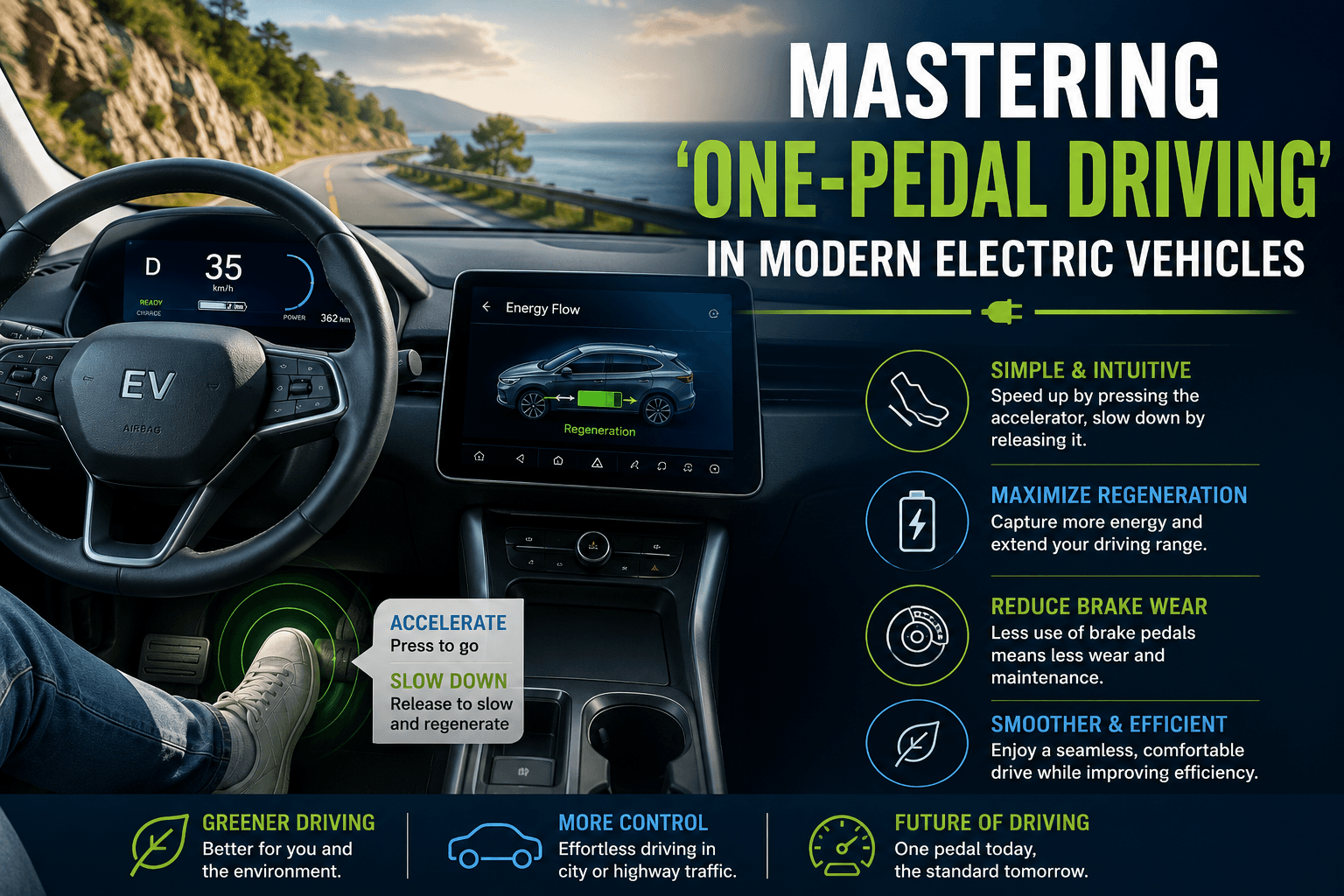
In a traditional gas car, you press the gas to go and the brake to stop. In an EV with one-pedal driving enabled, the electric motor acts as a generator the moment you lift your foot off the accelerator. This creates ‘regenerative braking’ which slows the car down significantly while sending energy back into the battery.
Why It Matters to You
- Extended Range: Every time you slow down using one-pedal driving, you are effectively ‘refueling’ your battery slightly, which can add miles to your trip.
- Reduced Maintenance: Because the motor handles most of the deceleration, your physical brake pads and rotors experience much less wear and tear, saving you money on repairs.
- Less Fatigue: In stop-and-go traffic, you don’t have to constantly switch your foot between two pedals.
How to Use It Without the Jerkiness
The biggest complaint from beginners is that the car feels ‘twitchy’ or stops too abruptly. Here is how to master it:
1. The ‘Feathering’ Technique
Instead of lifting your foot completely off the pedal when you want to slow down, treat the accelerator like a dimmer switch. Gradually ease off the pressure. The more you lift, the harder the car brakes. Finding that ‘sweet spot’ in the middle allows you to coast smoothly.
2. Anticipate the Stop
One-pedal driving requires you to look further ahead. If you see a red light in the distance, start easing off the pedal early. With practice, you can time it so the car comes to a complete, gentle stop exactly at the white line without ever touching the brake pedal.
3. Know When to Use the Real Brakes
One-pedal driving is not a replacement for your brake pedal in emergencies. If a car cuts you off or you need to stop instantly, always use the traditional brake pedal. Most systems are designed for controlled deceleration, not panic stops.
When Should You Turn It Off?
While great for city driving, some drivers prefer to turn one-pedal driving off (or set it to ‘Low’) during long highway cruises or when driving on icy/slippery roads where sudden motor braking might cause a loss of traction. Most EVs allow you to toggle this in the ‘Driving’ or ‘Regeneration’ menu on your touchscreen.
Summary: One-pedal driving takes about 20 minutes to get used to, but once you master the ‘feathering’ motion, you’ll enjoy a smoother ride and a healthier battery.