
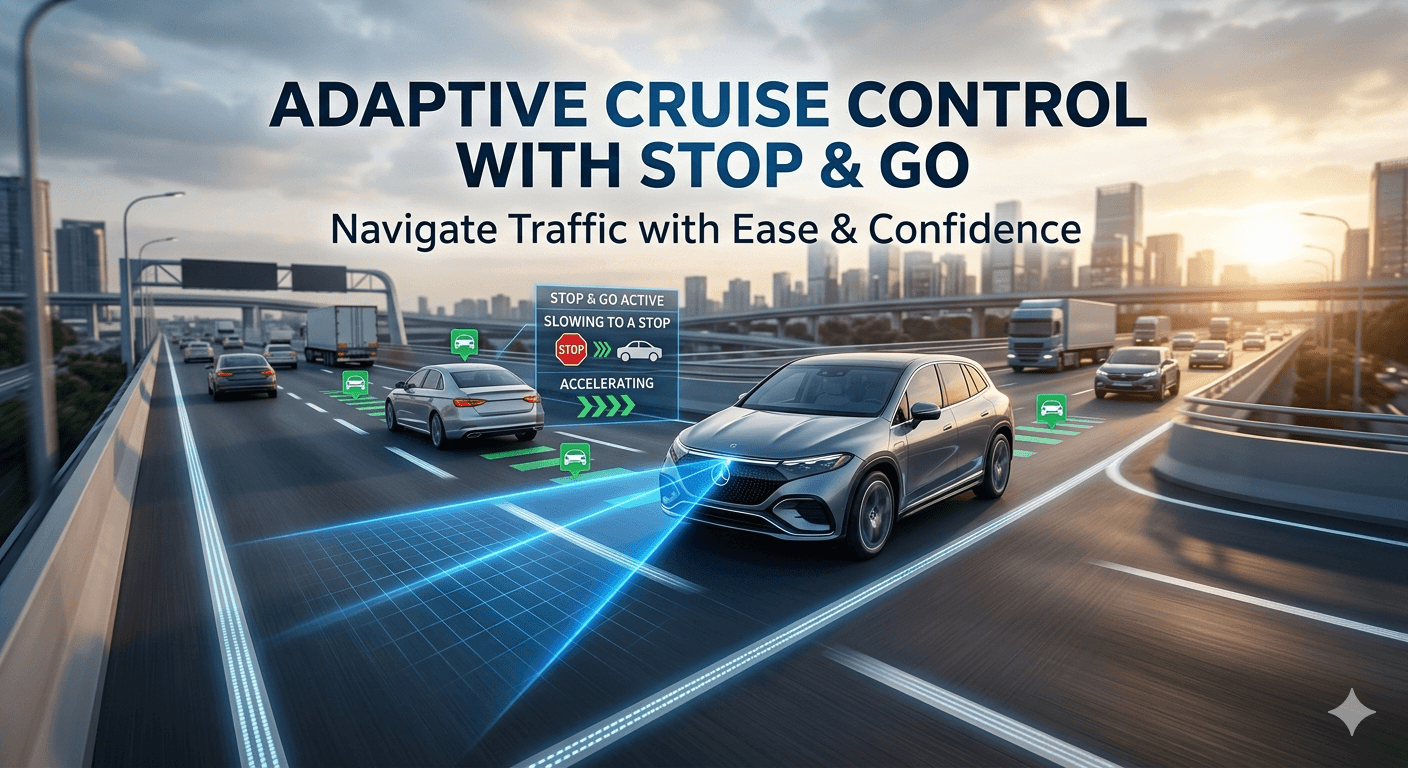
Mastering Adaptive Cruise Control with Stop & Go: Your Traffic Jam Secret Weapon
If you have ever been stuck in a morning commute where you move ten feet and then slam on the brakes for twenty minutes, you know how physically and mentally exhausting it is. Traditional cruise control is useless in these situations because it requires a steady open road. However, a modern feature called Adaptive Cruise Control (ACC) with Stop & Go is changing the way we handle heavy traffic.
What Exactly is ‘Stop & Go’ Functionality?
Standard Adaptive Cruise Control uses radar or cameras to maintain a set distance from the car in front of you. While regular ACC often shuts off once the car drops below 15 or 20 mph, the Stop & Go (or ‘Traffic Jam Assist’) version can bring your vehicle to a complete halt and then resume driving automatically when the car ahead moves.
How to Use It Correctly
While every car brand has a slightly different button layout, the process is generally the same for most modern SUVs and sedans:
- Activate: Press the ‘Cruise’ or ‘ACC’ button on your steering wheel.
- Set Speed: Once you reach your desired cruising speed, press ‘Set.’
- Adjust Distance: Look for a button that looks like a car with bars in front of it. This adjusts how much space you want to keep between you and the lead vehicle. In traffic, a shorter gap prevents people from constantly cutting you off.
- Resuming: If your car comes to a full stop for more than a few seconds, it may stay held there. Simply tap the ‘Resume’ button on the wheel or lightly press the gas pedal to tell the car to start moving again.
Why This Matters for Everyday Drivers
The primary benefit isn’t just convenience; it’s fatigue reduction. By letting the car manage the constant micro-adjustments of braking and accelerating in a jam, you arrive at your destination feeling much less stressed. It also acts as a safety net, as the system can often react to a sudden stop faster than a distracted human driver can.
Important Limitations to Remember
Even though this technology feels like magic, it is a driver-assist system, not a self-driving system. You must keep your eyes on the road and your hands on the wheel. These systems can sometimes struggle with:
- Extremely heavy rain or snow that blocks the sensors.
- Sharp curves where the sensor might ‘lose’ the car ahead.
- Construction zones with confusing lane markings.
Next time you are car shopping or checking out the features in your current ride, look for that ‘Stop & Go’ label—it might just be the most practical tech upgrade you’ll ever use.