
📰 Introduction
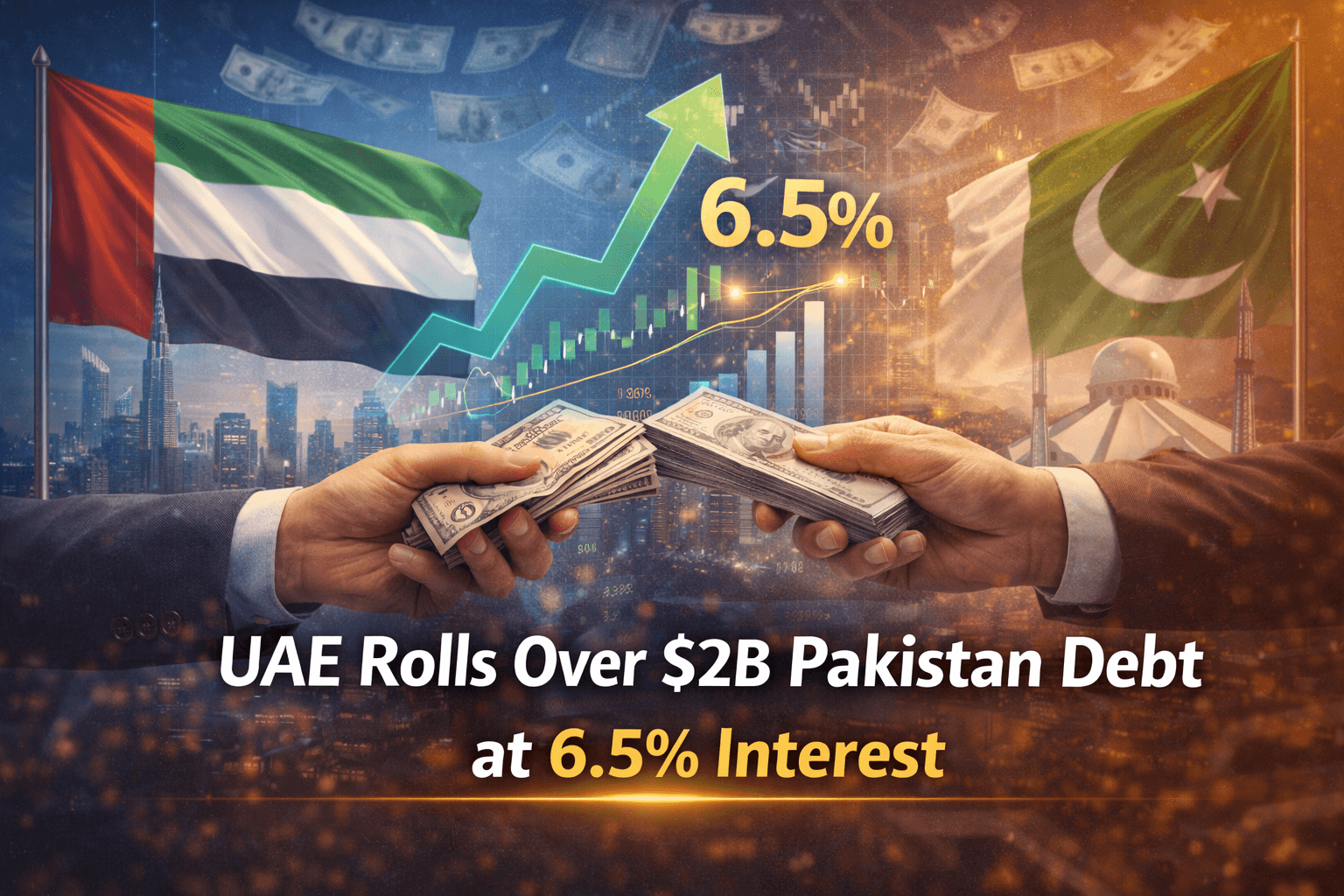
The United Arab Emirates (UAE) has rolled over $2 billion of Pakistan’s debt for a period of one month at a 6.5% interest rate, according to recent reports. The decision comes as Pakistan continues to navigate ongoing economic challenges, including foreign exchange shortages, rising inflation, and pressure on its fiscal reserves.
The rollover indicates continued financial cooperation between the two countries and reflects the UAE’s willingness to support Pakistan in a period of economic difficulty. This short-term arrangement provides temporary relief to Pakistan’s government while it seeks more stable and long-term financing solutions.
📉 Context: Pakistan’s Economic Situation
In recent years, Pakistan has faced persistent macroeconomic challenges, including:
Declining foreign exchange reserves
Rising import costs
Inflationary pressures
Increasing debt servicing obligations
The combination of these factors has placed significant strain on Pakistan’s ability to meet its external payment obligations without external financing support.
📊 What the Rollover Means
The rollover essentially means that Pakistan’s $2 billion obligation to the UAE did not have to be repaid immediately on the original due date. Instead, the payment was deferred for one month, with the new condition that the amount will be serviced at an interest rate of 6.5%.
This provides Pakistan with:
Breathing room for short-term liquidity
Time to arrange other financing or make strategic budget adjustments
A temporary reduction in pressure on foreign exchange reserves
Interest Rate Implications
A 6.5% interest rate for a rollover is relatively standard within international bilateral agreements of this nature. While it represents a cost to Pakistan’s treasury, it also reflects:
A negotiated compromise to balance relief vs. lending risk
A signaling of confidence from the UAE in Pakistan’s ability to manage its finances
The ongoing importance of Gulf-Pakistan economic ties
Experts say that such rollover arrangements often serve as a bridge while countries pursue longer-term funding, including from multilateral lenders like the IMF or World Bank.

🌍 Pakistan–UAE Financial Relations
Pakistan and the UAE have historically shared close economic relations. The UAE is not only a destination for millions of Pakistani expatriate workers but also a key partner in trade and investment.
Relations are shaped by:
Bilateral trade agreements
Remittances supporting Pakistan’s current account
UAE investment in Pakistani infrastructure, energy, and real estate
Cooperation within regional and international forums
This debt rollover is viewed within that broader context of strategic economic partnership.
📌 Potential Repercussions
Domestic Budget Planning
While the rollover provides short-term comfort, Pakistan still faces:
Budget deficit pressures
Continued import costs
Need for foreign exchange generation
Fiscal planners in Islamabad will need to factor in the rollover cost as part of broader debt planning.
Market Reaction
Although the direct financial impact is modest, markets tend to react to news of international financial support. Local investors and currency traders may interpret the rollover as a vote of confidence, while analysts stress the importance of sustainable economic reform.
🧠 What Experts Are Saying
Financial analysts note that:
Short-term debt relief is critical, but not sufficient alone
Structural reforms in tax policy, energy subsidies, and export incentives are needed
Relationships with Gulf partners like the UAE and Saudi Arabia remain important
One economist observed that relief measures such as this can be helpful stopgaps, but they must be paired with long-term fiscal planning to stabilize the economy.
📍 FAQ — Fast Facts
❓ What does “rolling over debt” mean?
Answer: It means deferring the repayment of a debt to a later date, in this case for one month, while agreeing to pay interest on the amount.
❓ Why is the UAE supporting Pakistan financially?
Answer: The UAE and Pakistan have a long history of economic cooperation tied to trade, remittances, and regional relations.
❓ How might this affect regular people in Pakistan?
Answer: Indirectly, it may help stabilize currency and ease financial pressure on the government, which can influence consumer prices and economic confidence.
❓ How might this affect regular people in Pakistan?
Answer: Yes, it is effectively a short-term loan with a rollover arrangement to delay repayment.
1 thought on “UAE Extends $2B Pakistan Debt Rollover at 6.5% Rate”