
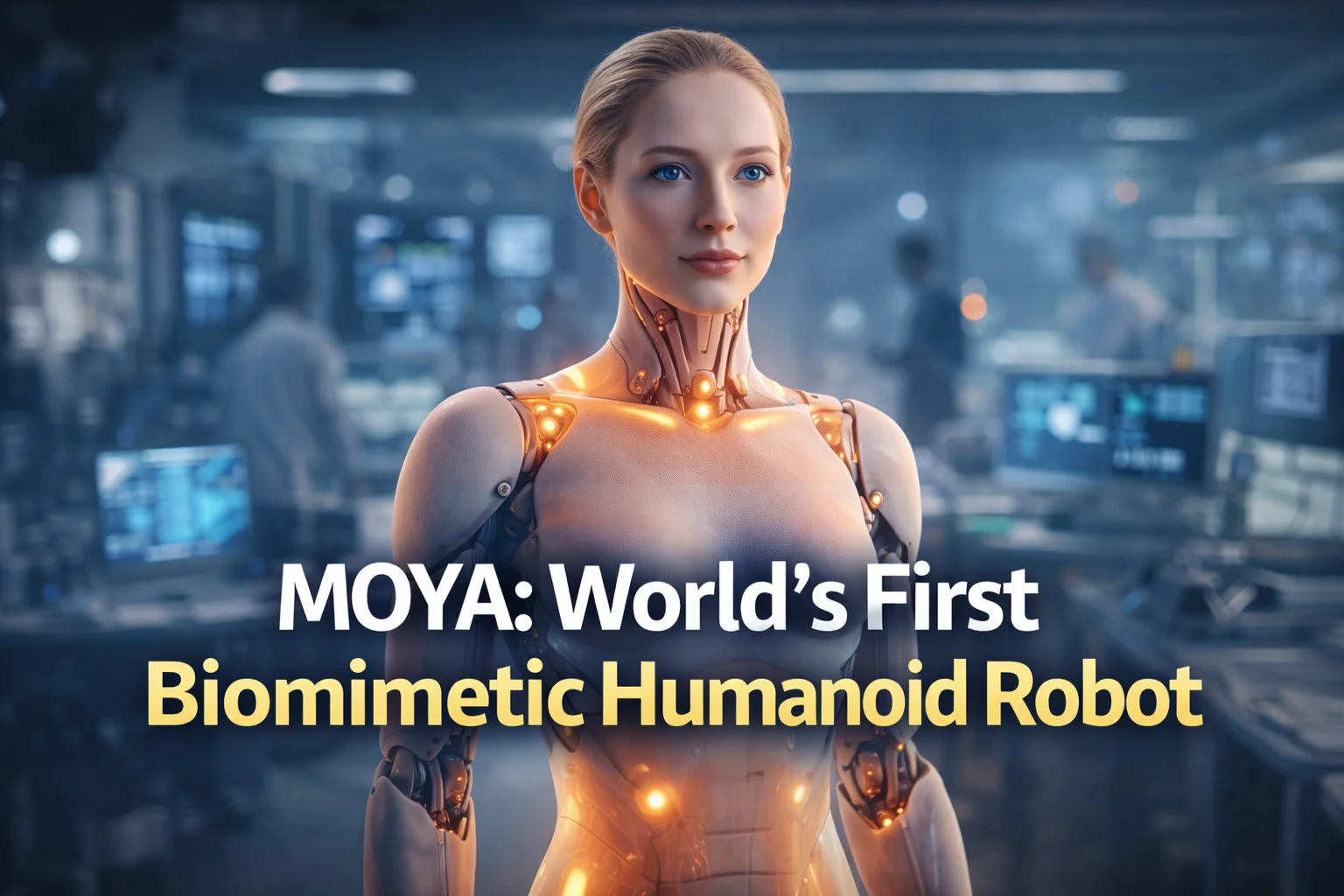
The global robotics industry has just crossed a historic milestone. A Chinese startup has officially unveiled MOYA, the world’s first biomimetic humanoid robot designed to maintain a human-like body temperature—a breakthrough that brings robots closer to human realism than ever before 🤯.
Unlike traditional humanoid robots that feel cold, mechanical, and artificial, MOYA is warm to the touch, mimicking the natural temperature range of the human body. This innovation is not just cosmetic—it represents a major leap forward in human-robot interaction, healthcare applications, and service robotics.
As China accelerates its dominance in artificial intelligence and robotics, MOYA is being hailed as a glimpse into the future of how humans and machines will coexist 🤖✨.
🧬 What Is MOYA? Understanding the Biomimetic Breakthrough
MOYA is classified as a biomimetic humanoid robot, meaning it is designed to replicate biological characteristics found in humans—not just in appearance, but in function and sensory behavior.
🔥 Human-Like Body Temperature
MOYA maintains a surface temperature between 36–37°C (96.8–98.6°F), matching the average human body temperature. This is achieved using:
-
Advanced thermal regulation systems
-
Smart sensors embedded beneath synthetic skin
-
AI-controlled heat distribution
This allows MOYA to feel warm and lifelike during physical interaction—something never achieved at this scale before.
🧠 The Technology Behind MOYA
🤖 1. Synthetic Skin & Thermal Sensors
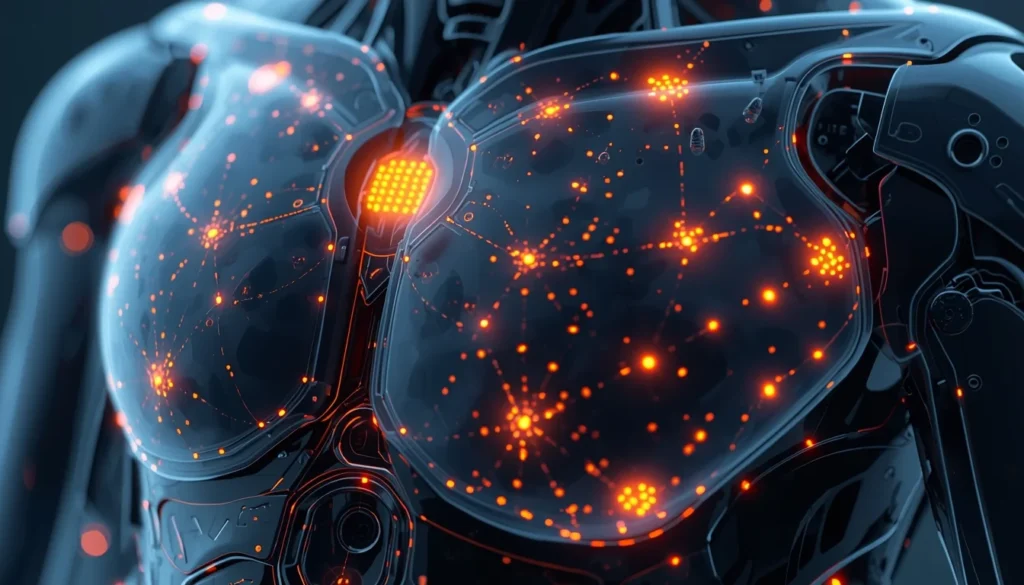
MOYA is covered with flexible synthetic skin embedded with micro-sensors that regulate temperature dynamically based on environment and interaction.
⚙️ 2. AI-Driven Thermal Control
The robot’s internal AI continuously adjusts heat output, preventing overheating while maintaining a natural feel.
🦾 3. Biomimetic Motion System
MOYA uses soft actuators and adaptive joints that simulate human muscle movement rather than rigid mechanical motion.
👁️ 4. Human-Like Facial Expressions
Advanced facial motors allow MOYA to display subtle expressions, enhancing emotional communication 😌.
🏭 Who Built MOYA?
The robot was developed by a Shenzhen-based Chinese robotics startup, backed by major investments in AI research and smart manufacturing.
China has heavily invested in:
-
Robotics automation
-
Artificial intelligence
-
Human-machine integration
MOYA is now being positioned as a flagship example of China’s next-generation robotics ambition 🇨🇳.
🌍 Why Human-Like Body Temperature Matters
You might ask: Why does temperature matter so much?
🧑⚕️ Healthcare & Elderly Care
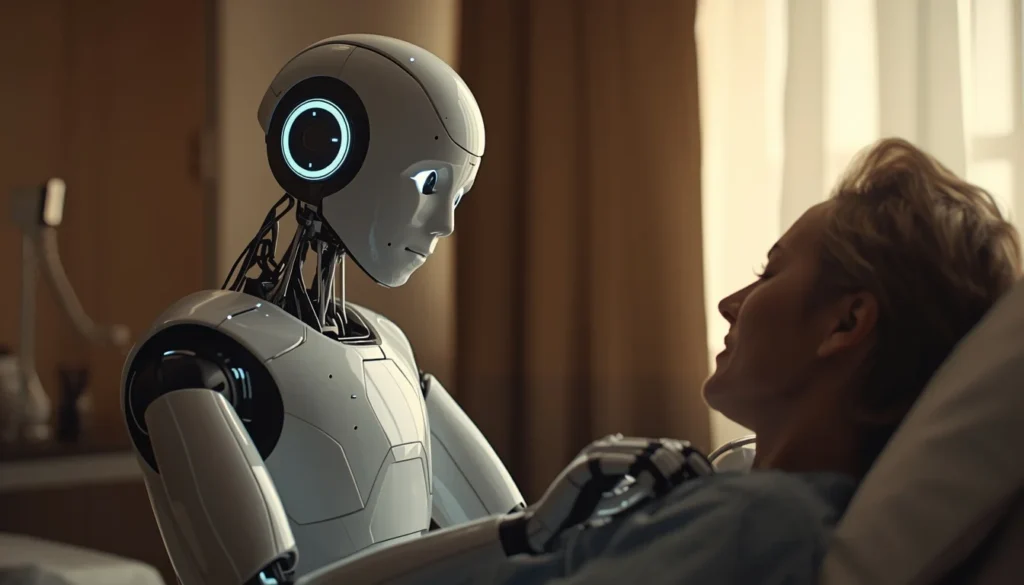
In caregiving environments, cold robots can feel unsettling. A warm humanoid robot:
-
Feels comforting
-
Reduces emotional stress
-
Improves trust and acceptance
🏨 Hospitality & Customer Service
MOYA could be deployed in hotels, airports, and malls, where human-like warmth improves social comfort.
🤝 Human-Robot Emotional Bonding
Psychological studies show humans respond more positively to warmth—literally and emotionally ❤️.
🏥 Potential Use Cases of MOYA
🏥 Healthcare
-
Elderly companionship
-
Hospital assistance
-
Rehabilitation support
🏫 Education
-
Interactive teaching assistants
-
Language learning companions
🏢 Corporate & Service Industry
-
Front-desk humanoid staff
-
Customer interaction roles
🧪 Research & Development
-
Human-robot interaction studies
-
AI behavioral modeling
📈 How MOYA Changes the Robotics Industry
MOYA is not just another robot—it introduces a new standard.
🔄 From Mechanical to Biological Design
Robots are shifting from metal-and-wires to bio-inspired systems.
🧠 Emotional AI Integration
Combining warmth, expression, and adaptive behavior moves robots closer to emotional intelligence.
🌐 Global Competition
The unveiling of MOYA intensifies competition between China, the US, Japan, and Europe in humanoid robotics.
🇺🇸🇬🇧 Global Reaction: Why the US and UK Are Watching Closely
Experts in the US and UK have noted that MOYA represents a strategic leap in robotics capability.
Western companies are now under pressure to:
-
Accelerate humanoid R&D
-
Invest in biomimetic technologies
-
Improve human-robot trust systems
MOYA could influence future robot safety standards, ethics debates, and labor discussions worldwide.
⚠️ Ethical and Social Concerns
While MOYA is impressive, it raises important questions:
-
🤔 Should robots feel human?
-
🧠 Could emotional attachment become unhealthy?
-
👷 Will humanoid robots replace human jobs?
Regulators and ethicists argue that clear guidelines must evolve alongside the technology.
🔮 What Comes Next for MOYA?
The startup plans to:
-
Begin limited pilot programs
-
Expand AI emotional response systems
-
Explore international partnerships
Mass production may still be years away, but MOYA has already redefined what’s possible in humanoid robotics 🚀.
❓ FAQs
❓ What is MOYA?
MOYA is a biomimetic humanoid robot developed by a Chinese startup, featuring human-like body temperature and lifelike interaction.
❓ Why is human-like temperature important?
It improves emotional comfort, trust, and acceptance during human-robot interaction.
❓ Is MOYA available for sale?
Currently, MOYA is in demonstration and pilot phases, not mass commercial release.
❓ Where will MOYA be used?
Healthcare, hospitality, education, customer service, and research environments.
❓ Is this the first robot of its kind?
Yes, MOYA is the world’s first humanoid robot designed to maintain realistic human body temperature.
🧾 Conclusion
MOYA is more than a robot—it’s a symbol of how rapidly technology is closing the gap between humans and machines. By introducing human-like body temperature, this Chinese startup has solved a problem many didn’t realize existed but immediately recognize as revolutionary.
As biomimetic humanoid robots evolve, MOYA could mark the moment when robots stopped feeling like machines—and started feeling almost human 🤖❤️.