Plasma Engine 
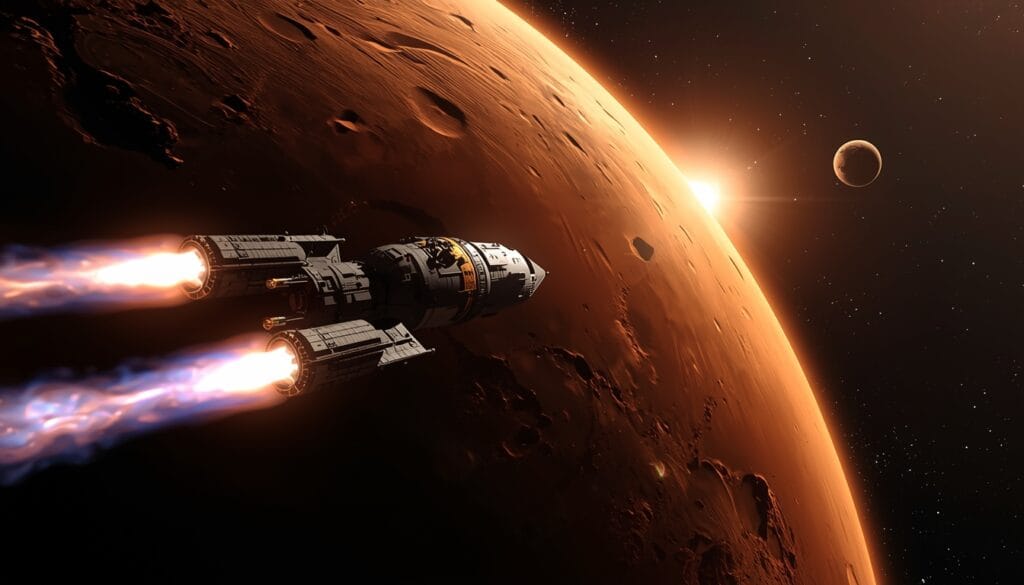
Humanity’s dream of reaching Mars has taken a bold step forward as Russian scientists and engineers work on an advanced plasma engine that could dramatically reduce travel time to the Red Planet. According to researchers, this next-generation propulsion system could make it possible for humans to reach Mars in as little as 30 days—a journey that currently takes six to nine months using conventional rocket technology 🚀.
If successful, this innovation could reshape the future of space exploration, interplanetary travel, and long-term human presence beyond Earth. While still under development, the plasma engine represents a major leap in propulsion science and has already sparked global interest among space agencies and researchers.
🔬 What Is a Plasma Engine?
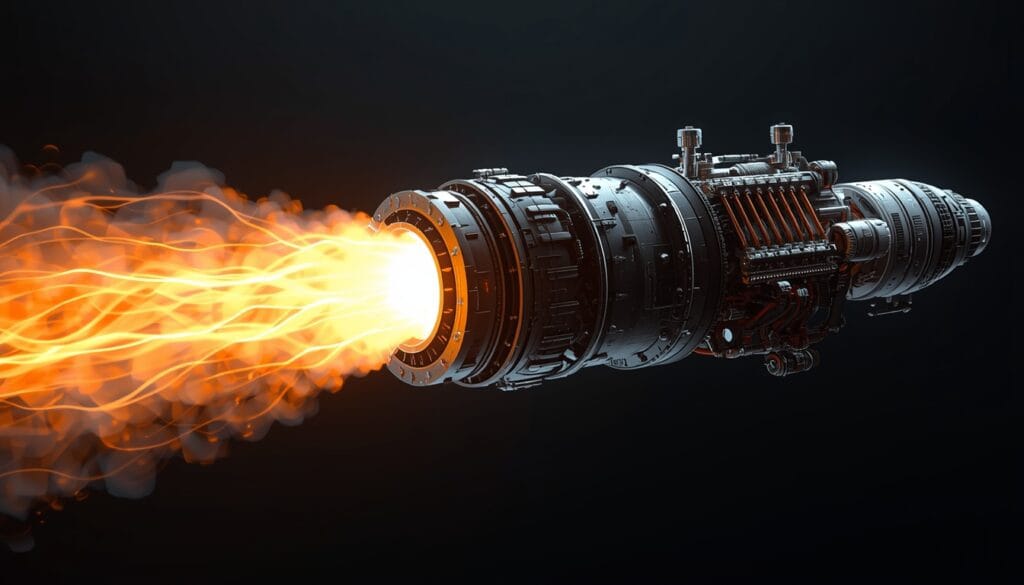
A plasma engine is a type of advanced electric propulsion system that uses ionized gas—known as plasma—to generate thrust ⚡.
🧪 Understanding Plasma
Plasma is often called the fourth state of matter, formed when gas is energized until electrons separate from atoms. This charged state allows plasma to be manipulated using electric and magnetic fields.
Unlike chemical rockets that rely on explosive fuel combustion, plasma engines:
Use electricity to accelerate charged particles
Produce continuous thrust over long periods
Require significantly less fuel
🧠 How Russia’s Plasma Engine Works
Russia’s proposed plasma engine is designed to generate constant, high-speed thrust using electromagnetic acceleration.
⚙️ Core Working Principles
⚡ Electricity ionizes gas into plasma
🧲 Magnetic fields accelerate plasma particles
🚀 High-velocity exhaust produces forward thrust
🔁 Continuous operation enables sustained acceleration
This approach allows spacecraft to keep accelerating for most of the journey, unlike chemical rockets that burn briefly and then coast.
⏱️ Why 30 Days to Mars Is a Big Deal
Reducing travel time to Mars from months to weeks could dramatically change mission feasibility 🌍➡️🔴.
🌟 Key Benefits of Faster Mars Travel
🧑🚀 Improved Astronaut Health
Reduced exposure to cosmic radiation ☢️
Less muscle and bone density loss
Lower psychological stress from long missions
🛰️ Mission Efficiency
🌌 Expanded Exploration Possibilities
🆚 Plasma Engines vs Chemical Rockets
| Feature | Chemical Rockets | Plasma Engines |
|---|
| Thrust | High, short burst | Lower, continuous |
| Fuel Efficiency | Low | Very high |
| Travel Time to Mars | 6–9 months | ~30 days (theoretical) |
| Technology Maturity | Proven | Experimental |
While plasma engines currently produce less thrust than chemical rockets, their efficiency makes them ideal for deep-space missions.
🛰️ Russia’s Role in Advanced Space Propulsion
Russia has a long history of innovation in space technology, from early orbital missions to advanced propulsion research 🇷🇺.
🔭 Research Focus Areas
Electric propulsion systems
Nuclear-powered space technologies
Long-duration spaceflight
Human exploration of deep space
The plasma engine project aligns with Russia’s broader goals of maintaining leadership in advanced space engineering.
🌍 Global Interest in Plasma Propulsion
Russia is not alone in exploring plasma propulsion. Space agencies worldwide are investigating similar technologies.
🌐 International Research Efforts
NASA’s ion and Hall-effect thrusters
ESA electric propulsion programs
Private-sector deep-space propulsion research
However, Russia’s claim of a 30-day Mars transit places its plasma engine concept among the most ambitious.
⚠️ Challenges and Limitations
Despite its promise, plasma propulsion still faces several technical hurdles.
🧩 Major Challenges
⚡ Power Generation
Plasma engines require large amounts of electrical energy, often demanding nuclear or advanced solar power systems.
🔥 Heat Management
Sustained plasma acceleration generates extreme heat, requiring advanced cooling systems.
🛠️ Engineering Complexity
Building reliable systems capable of operating continuously for weeks is technically demanding.
🧪 Testing and Validation
Extensive space testing is required before human missions can be approved.
🧠 Safety and Ethical Considerations
Any technology designed for human spaceflight must meet strict safety standards.
Key considerations include:
Plasma propulsion must undergo years of testing before being used for crewed missions.
🔮 The Future of Plasma Engines in Space Exploration
While a 30-day Mars mission remains theoretical, plasma engines could soon be used for:
As power generation and materials science improve, plasma propulsion could become a cornerstone of future space travel.