
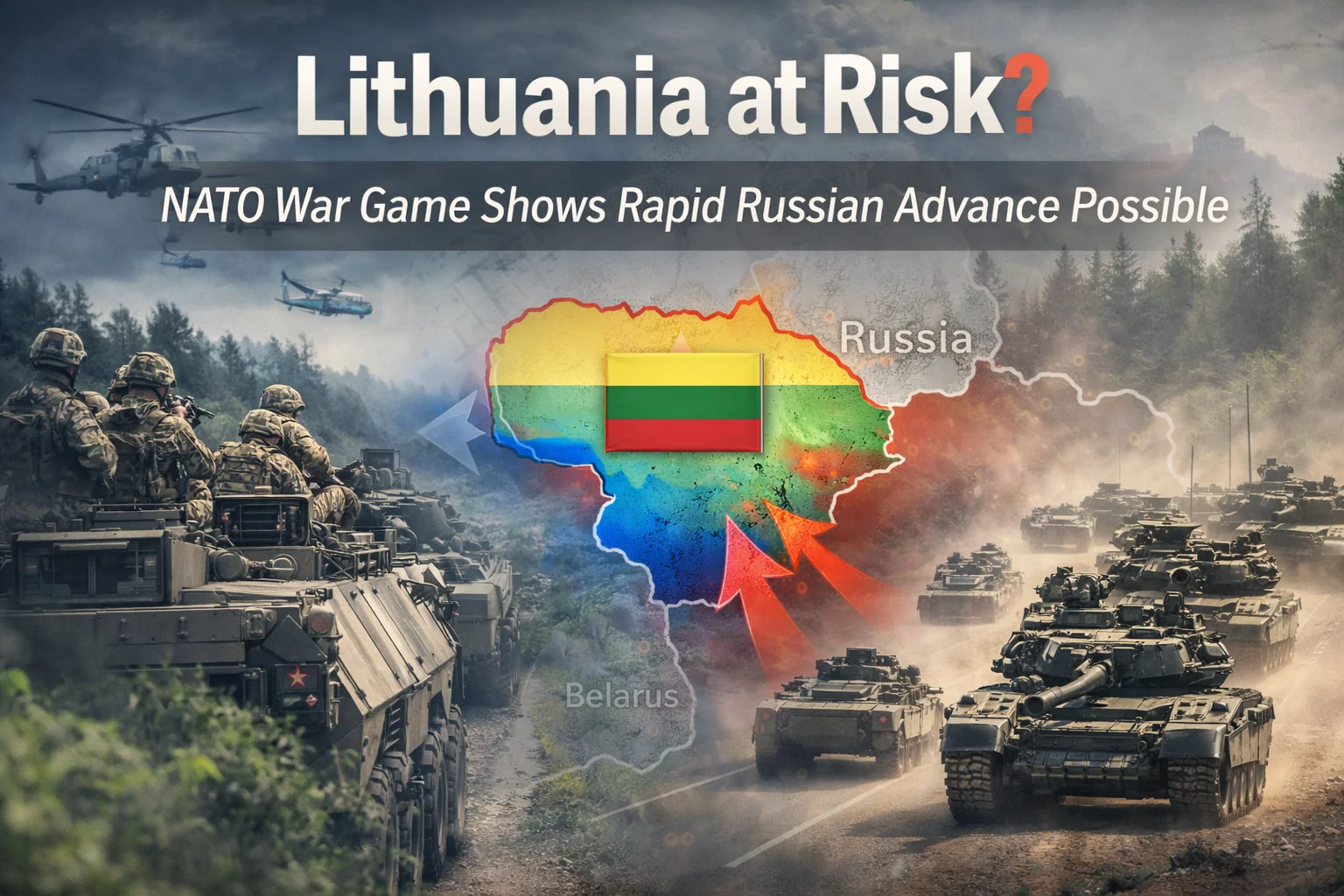
A recent NATO war game simulation has sent shockwaves through the international defense community: the simulation suggests that Russia could overrun Lithuania in just days if a large-scale conflict were to occur.
The exercise, which included advanced military modeling and strategic planning, is designed to test NATO’s response capabilities and identify potential weaknesses in defending its member states.
📰 What the Simulation Showed
According to reports, the NATO war game scenario assumed:
Rapid mobilization of Russian ground and air forces
High-speed mechanized assaults on Lithuania’s borders
Cyberattacks to disrupt communications and logistics
NATO countermeasures, including air support and rapid troop deployment
Despite NATO’s preparedness, analysts indicated that the Baltic nation could be quickly overwhelmed without immediate support from allied forces.
🛡️ NATO’s Preparedness and Response Strategy
NATO officials emphasize that war games are simulations, not predictions. They serve as tools to:
Test defensive readiness
Identify vulnerabilities in member states’ military systems
Improve cooperation among allied forces
Enhance rapid deployment strategies
Key Measures in Place
Multinational NATO battlegroups stationed in Lithuania and neighboring countries
Advanced missile defense systems deployed in the Baltic region
Continuous air patrols and naval presence in the Baltic Sea
🌍 Geopolitical Implications
he war game scenario highlights regional security risks:
Russia maintains significant military capabilities in the Kaliningrad region
Baltic states, including Lithuania, Latvia, and Estonia, are considered frontline NATO members
Rapid escalation could prompt immediate international response under Article 5
🧠 Expert Analysis
Military analysts warn:
Speed of modern warfare: Mechanized forces and air support could allow rapid territorial gains
Cyber vulnerabilities: Disruptions in communication networks could delay NATO response
Deterrence is key: Visible NATO presence can prevent actual aggression
📰 Public Reaction and Awareness
The news has drawn attention from U.S. policymakers, European leaders, and citizens concerned about global security. Many Americans are paying closer attention to NATO activities and Baltic security as part of international defense awareness.
⚠️ Why Lithuania is Vulnerable
Lithuania’s geographic position and small population make it strategically sensitive:
Shared border with Russia’s Kaliningrad exclave
Limited manpower compared to Russian military
Reliance on rapid NATO reinforcement
This vulnerability is precisely why NATO conducts regular war games and readiness drills.
🪖 NATO’s Takeaway
The takeaway from the simulation is not alarm, but preparedness. NATO emphasizes:
Rapid deployment exercises are ongoing
Reinforcements can arrive within hours to days
Cybersecurity and communication infrastructure must be strengthened
The simulation allows NATO and member states to correct weaknesses before a real conflict occurs.

❓ Frequently Asked Questions
What is the NATO war game about?
It’s a simulation to test NATO’s defensive readiness and response capabilities in the Baltic region.
Could Lithuania really fall in days?
The simulation suggests rapid overrun is possible without immediate NATO support, but it is hypothetical, not a prediction.
Could Lithuania really fall in days?
Through rapid deployment, multinational battlegroups, air and naval support, and cybersecurity measures.
Why is Lithuania vulnerable?
Its location next to Russia’s Kaliningrad region and limited military size make it a strategic frontline state.
Should the public be alarmed?
The simulation is meant for preparedness, not to create panic. NATO has measures to prevent real-world rapid aggression.
🌟 Conclusion
The NATO war game emphasizes that preparedness is essential in today’s geopolitical landscape. While Lithuania faces potential vulnerabilities, coordinated NATO strategy, rapid deployment, and ongoing military exercises help maintain regional security.
The simulation serves as a wake-up call for vigilance and international cooperation, reminding global audiences that defense readiness is crucial for peace.