
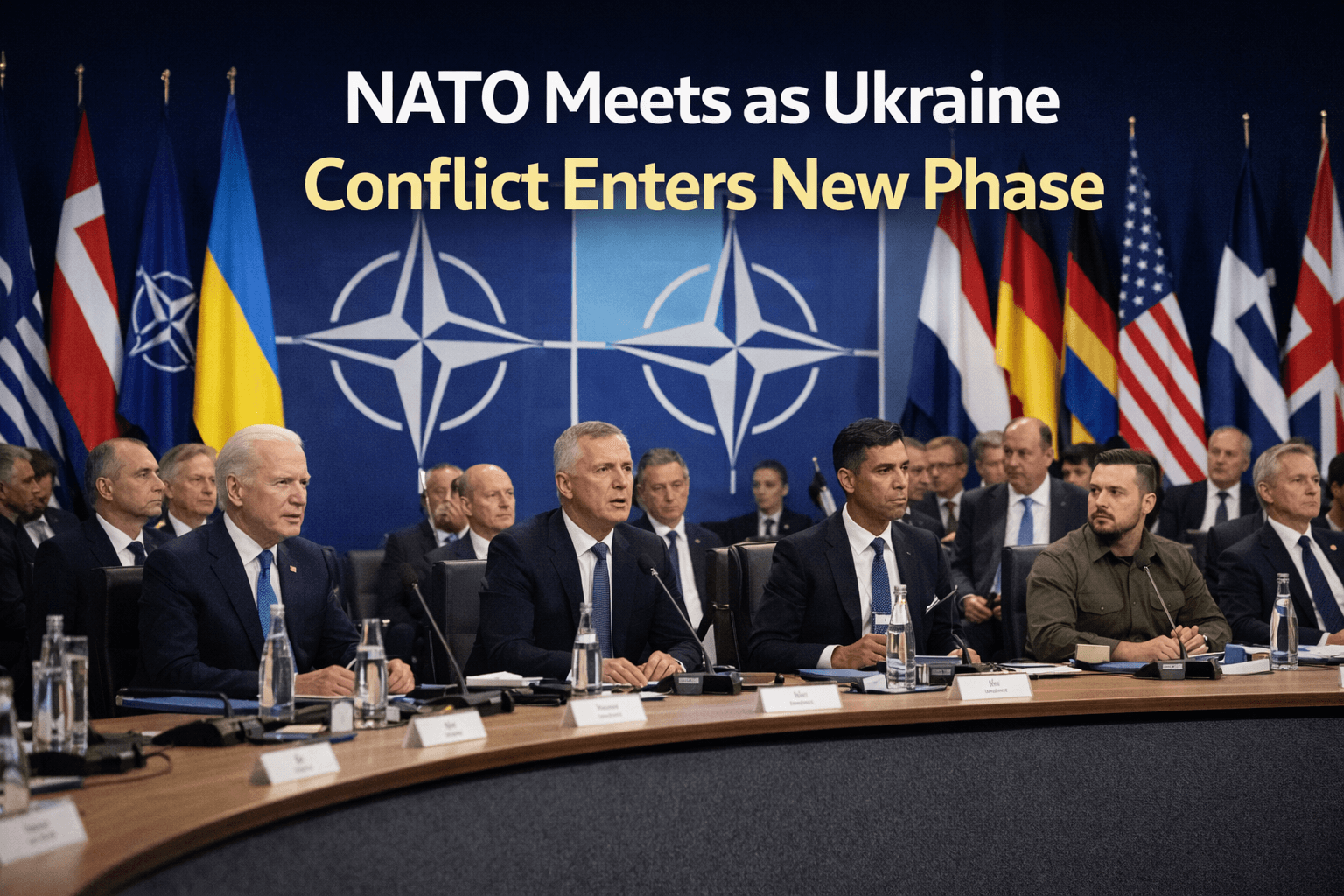
In a critical moment for international security, NATO leaders met to address the ongoing conflict in Ukraine as it enters what many senior officials describe as a “new phase” of engagement and strategic cooperation.
The summit, which included NATO allies and Ukraine’s partners, focused on enhanced security guarantees, military support frameworks, diplomatic efforts, and next steps in peace negotiations. The meeting comes amid renewed fighting, evolving battlefield dynamics, and parallel peace talks that seek to chart a future path for an end to hostilities.
🌍 What “New Phase” Means in Context
Senior voices across Ukraine and allied circles have described the conflict as entering a new phase, marked not just by battlefield operations but by intensified diplomatic efforts and strategic planning.
Ukrainian leaders alongside NATO officials now emphasize broader support mechanisms, including security guarantees and long-term defense arrangements, rather than short-term aid. This shift reflects the conflict’s protracted nature and the likelihood that diplomatic strategy and alliance cohesion will play bigger roles going forward.
The term “new phase” also signals that traditional front-line fighting is only one element of a wider geopolitical and military strategy involving multiple stakeholders, including the United States, European Union states, and NATO itself.
🛡️ Reinforced Military and Security Support
One of the central results of recent discussions among NATO leaders has been the strengthening of security commitments to Ukraine. According to senior officials, alliance members have reaffirmed their collective commitment to ensuring Ukraine has long-term defense capabilities — including air defenses, artillery, and coordinated logistics support.
🇪🇺 Coalition of Support
European leaders alongside NATO representatives described the meeting as reinforcing a “coalition of the willing” — a group of nations committed to supporting Ukraine’s defense and negotiating leverage. Statements from EU and NATO circles reaffirmed shared goals of maintaining Ukraine’s sovereignty, security, and territorial integrity.
✈️ Security Guarantees and Defensive Measures
Commitments included discussions around potential security guarantees, integrated air defense enhancements, and support for strengthening Ukrainian operational capabilities through joint planning and training initiatives.
Longer-term efforts envision integrated responses that could include multinational forces or coordinated regional defense planning once hostilities have ceased, reflecting a shift toward structured, enduring support frameworks beyond emergency aid.
🕊️ Diplomatic Talks and Peace Negotiations
Parallel to NATO meetings, US-led peace talks between Ukraine and Russia have been under way in Abu Dhabi and other diplomatic venues, generating what participants describe as “productive” first rounds despite continued skepticism about Moscow’s willingness to reach a mutually accepted agreement.
These talks have resulted in high-level prisoner exchanges and renewed engagement between the parties. However, intense missile strikes and battlefield violence continue, indicating that while diplomacy remains active, conflict dynamics on the ground have not yet eased significantly.
🔥 Russian Military Buildup
Recent intelligence assessments — including assessments from European officials — suggest Russia continues to reinforce its military capabilities along NATO borders, with plans to expand conventional forces. While such movements fall short of an immediate attack on NATO territories, they contribute to ongoing security concerns among alliance members.
🤝 Reestablishment of US-Russia Military Dialogue
In a noteworthy development, the United States and Russia have agreed to reestablish high-level military dialogue — the first such communication channel in more than four years. This dialogue follows peace negotiations and includes broader strategic discussions aimed at preventing unintended escalations between NATO and Russia.
Also accompanying these talks were prisoner exchange agreements and cooperative measures aimed at reducing immediate tensions, even as profound differences remain on issues of territorial sovereignty and wartime accountability.
🌐 Broader International Reactions
🧠 European Perspectives
European political leaders have characterized the conflict as a “once-in-a-generation moment” requiring unity and sustained support for Ukraine. Many voices have stressed the importance of collective defense, economic sanctions, and diplomatic pressure on Russia to reduce hostilities.
🪖 Long-Term Support and Sanctions
Leaders participating in coalitions connected with NATO and the EU have also declared support for multi-billion-euro military aid packages and coordinated sanctions that target Russia’s financial and energy sectors, in hopes of weakening its ability to sustain prolonged conflict efforts.
The language of a “new phase” implies that the conflict in Ukraine is now a multi-track strategic engagement — not limited to battlefield advances and retreats. Key elements include:
Expanded military cooperation and commitments
Diplomatic negotiations with multiple international actors
Long-term defense planning with NATO frameworks
Economic sanctions and strategic resource pressure
This emerging phase reflects a geopolitical environment where alliances, defense economics, and international law are as central as frontline battle developments.
❓ FAQs
Q: What does “new phase” mean in the Ukraine conflict?
It refers to an evolving stage where diplomatic negotiations, strategic support guarantees, and coordinated defense planning become as central as battlefield operations.
Q: Are NATO leaders still supporting Ukraine?
Yes. NATO allies have reaffirmed long-term support plans, including defense aid and security guarantees.
Q: Is Russia still attacking Ukraine?
Yes. Despite diplomatic talks and negotiations, Russia continues offensive military operations in several regions.
Q: Has a peace agreement been reached?
Not yet. Ongoing talks have produced some agreements like prisoner exchanges, but no comprehensive peace deal has been finalized.
Q: Why is NATO involved?
NATO involvement supports Ukraine’s defense capabilities and aligns with broader European and transatlantic security interests.