
Mastering One-Pedal Driving: A Better Way to Commute
If you’ve recently purchased an electric vehicle (EV) or a modern hybrid, you might have noticed a button labeled ‘e-Pedal,’ ‘i-Pedal,’ or simply ‘One-Pedal Driving.’ While it sounds like something from a sci-fi movie, it is one of the most practical features in modern automotive technology. Here is everything you need to know about how it works and how to use it safely.
What Exactly is One-Pedal Driving?
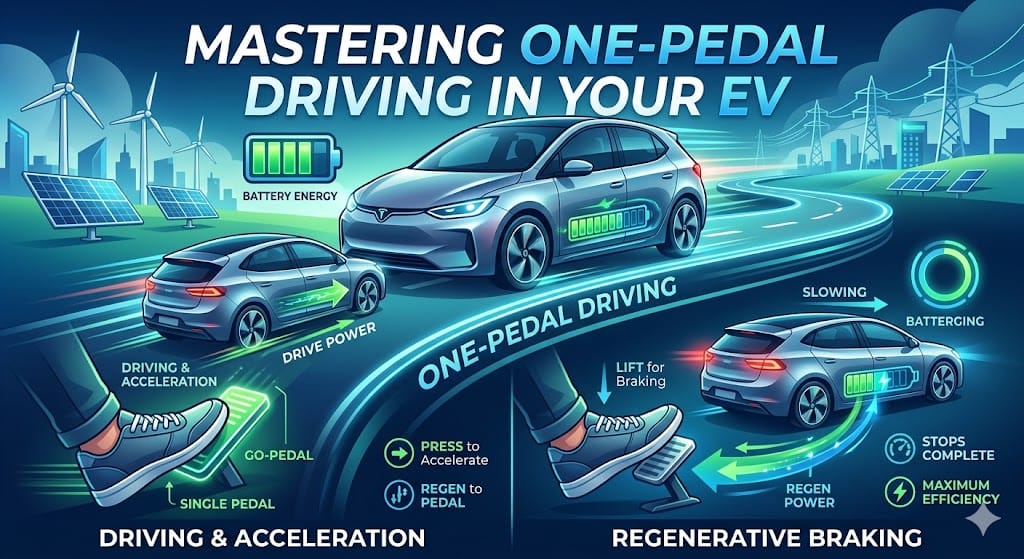
In a traditional gas car, you press the accelerator to go and the brake pedal to stop. One-pedal driving allows you to do both using almost exclusively the accelerator. When you press down, you speed up; as you lift your foot off, the car uses its electric motor as a generator to slow the vehicle down significantly.
This process is called regenerative braking. Instead of wasting energy as heat through traditional brake pads, the car captures that kinetic energy and puts it back into your battery.
How to Use It Like a Pro
Switching to one-pedal driving requires a slight change in muscle memory, but most drivers find it more relaxing once they get the hang of it. Follow these steps to master the technique:
- Ease Off, Don’t Lift: Instead of taking your foot completely off the pedal like you would in a gas car, learn to modulate. Slowly lifting your foot will cause the car to decelerate smoothly.
- Anticipate the Stop: Look further down the road. If you see a red light ahead, start easing off the pedal early. The car will slow down naturally and come to a complete stop exactly where you want it.
- Keep the Brake Ready: One-pedal driving is powerful, but it isn’t an emergency system. In a sudden stop situation, you must still use your traditional brake pedal to halt the car quickly.
Why Every Driver Should Try It
Why bother learning a new way to drive? There are three major benefits for the everyday driver:
- Extended Range: By recapturing energy during deceleration, you can actually add miles back to your battery while driving in stop-and-go traffic.
- Reduced Maintenance: Because the motor handles most of the slowing down, your physical brake pads and rotors last significantly longer—sometimes two or three times as long as a gas car.
- Less Fatigue: In heavy traffic, you aren’t constantly switching your foot back and forth between two pedals. This makes commuting much less physically demanding.
Is It Safe?
Yes. Modern vehicles are programmed to turn on your brake lights automatically whenever the car slows down via one-pedal driving, even if you aren’t touching the brake pedal. This ensures drivers behind you are always aware of your speed changes.
Conclusion
One-pedal driving is a game-changer for urban driving and daily commutes. It makes your vehicle more efficient and your drive more comfortable. If your car has this feature, give it a try on a quiet neighborhood street first—you’ll likely never want to go back to the ‘two-pedal shuffle’ again.