
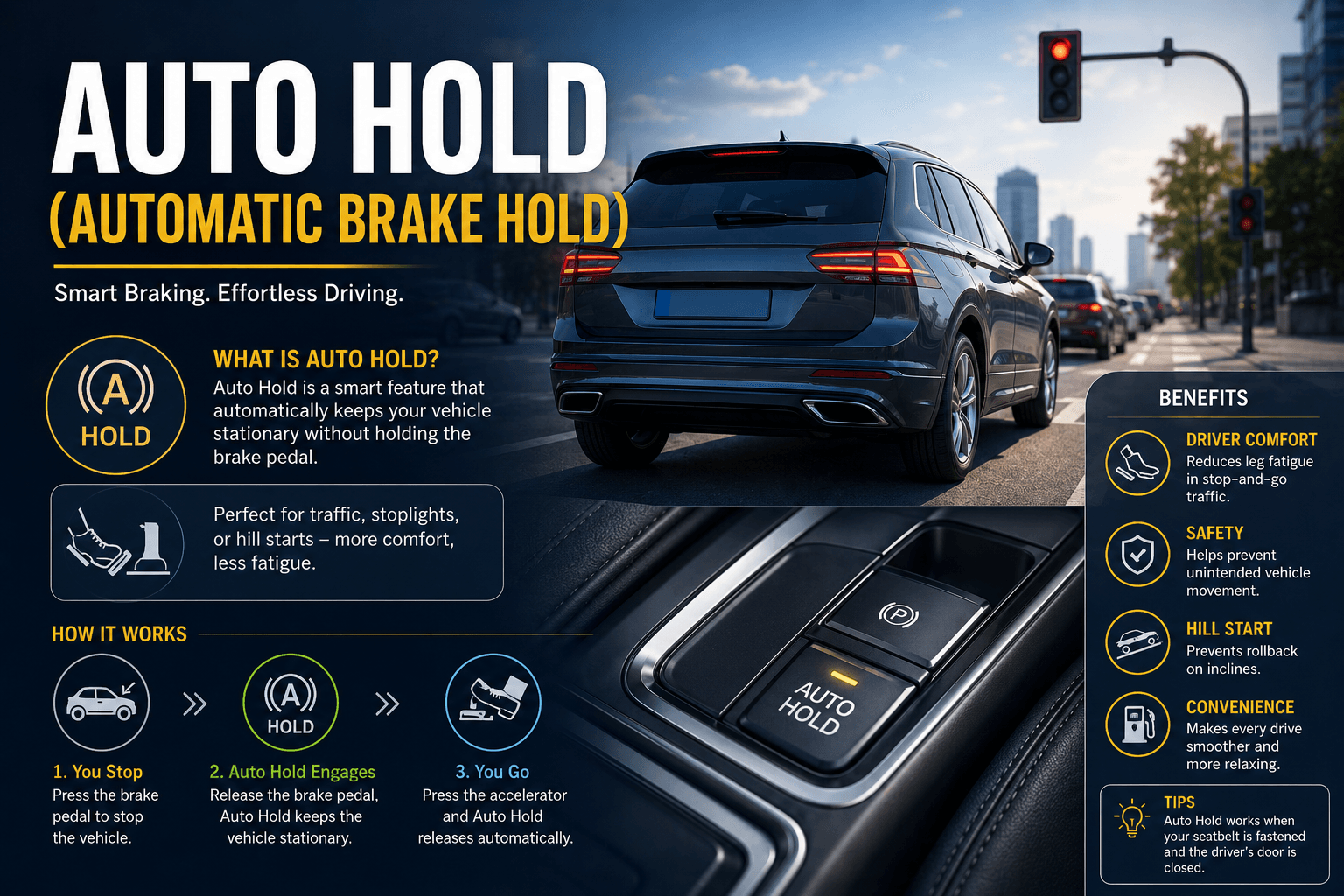
What is Auto Hold? The Small Button That Ends Traffic Foot Fatigue
If you drive a modern car, you have likely noticed a button near your gear shifter or electronic parking brake labeled ‘Auto Hold’ or simply ‘A’ inside a circle. While it might look like just another piece of dashboard clutter, this feature is one of the most practical innovations for daily commuters.
What is Auto Hold?
Auto Hold is a driver assistance feature that automatically keeps your car’s brakes applied after you have come to a complete stop. Instead of keeping your foot firmly pressed on the brake pedal at a long red light or in stop-and-go traffic, the car does the work for you.
Once activated, you can take your foot off the brake, and the car will remain stationary. The brake lights stay on, and the car won’t budge until you tap the accelerator pedal to move again.
How to Use Auto Hold (Step-by-Step)
Using Auto Hold is simple, but it requires a specific sequence to ensure safety:
- Fasten your seatbelt: Most cars will not allow Auto Hold to engage unless the driver’s seatbelt is buckled.
- Locate the button: Look for the ‘Auto Hold’ or ‘(A)’ button near the center console. Press it once; a light (usually green) will appear on your dashboard to show the system is on standby.
- Come to a stop: Drive as usual. When you reach a red light, press the brake until the car stops completely.
- Release the pedal: Look for a secondary indicator light (often the word ‘HOLD’) on your dash. Once you see it, you can take your foot off the brake pedal.
- Drive away: When traffic moves, gently press the gas pedal. The system automatically releases the brakes, and you move forward smoothly.
Why This Feature Matters for Daily Drivers
The primary benefit is comfort. In heavy city traffic, your leg can get tired from constant braking. Auto Hold eliminates ‘creeping’ (when a car rolls forward slowly in ‘Drive’) and prevents the car from rolling backward on steep hills.
Safety Tips: When to Turn It Off
While Auto Hold is incredibly useful, there are two specific times you should turn it off:
- Automatic Car Washes: If the car wash uses a conveyor system, Auto Hold might engage and lock your wheels, potentially damaging the car or the equipment.
- Tight Parallel Parking: When parking in very small spaces, most drivers rely on the car’s natural ‘creep’ to move inches at a time. Auto Hold can make these tiny movements feel jerky.
Pro Tip: Auto Hold is not a parking brake. When you are finished driving for the day, always put the car in ‘Park’ and engage your electronic parking brake manually if your car doesn’t do it automatically.