
🧠 Introduction
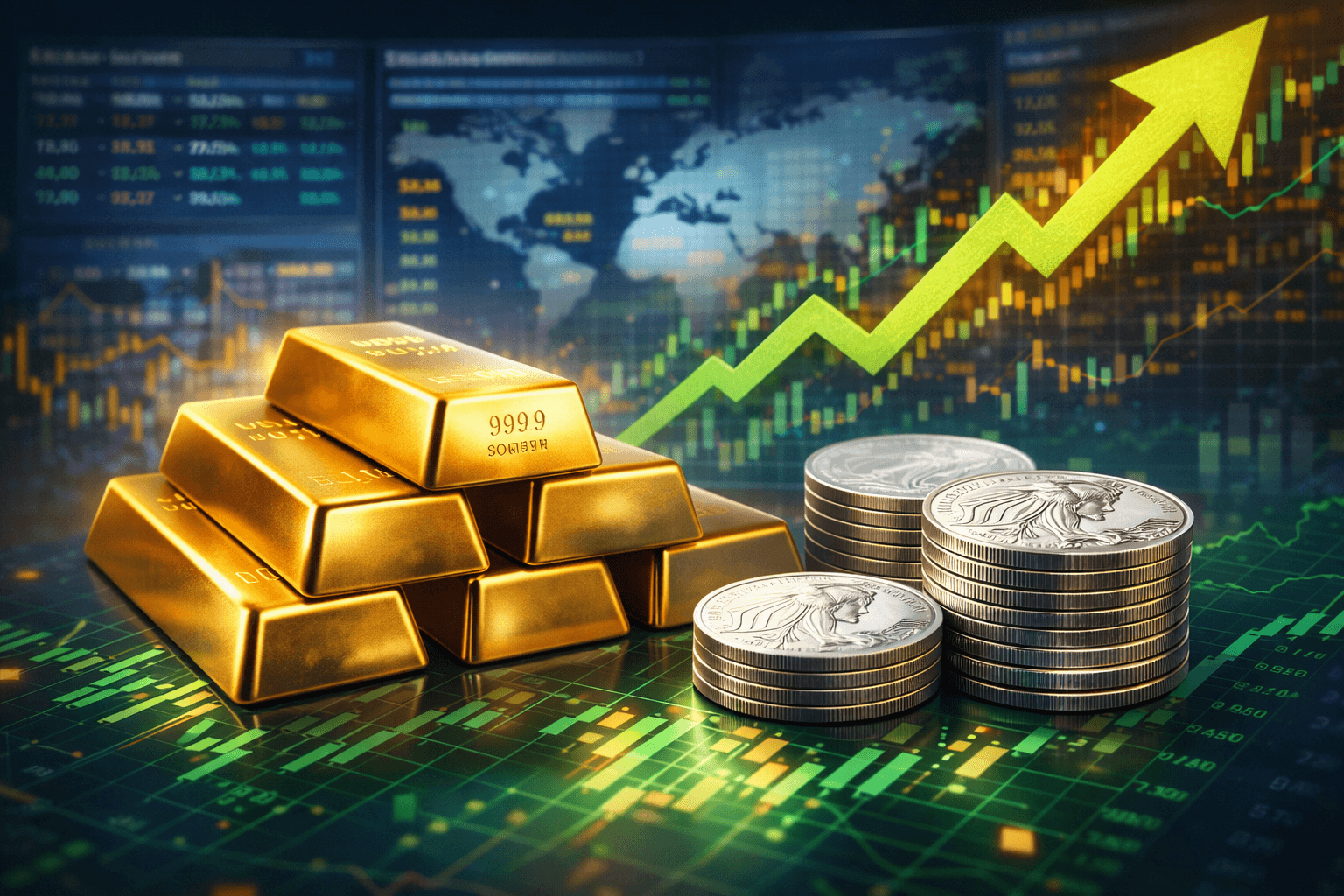
After experiencing one of their sharpest short-term declines in recent months, gold and silver prices are rebounding, restoring confidence among investors and analysts. The recovery comes as market experts emphasize that the long-term fundamentals behind precious metals remain intact, despite recent volatility.
This rebound is being closely watched by global investors, central banks, and retail traders alike, as precious metals continue to serve as a hedge against inflation, currency risk, and geopolitical uncertainty.
Gold and silver are regaining strength as investors refocus on inflation risks, central bank policies, and long-term economic uncertainty.
📉 What Caused the Recent Sell-Off?
The recent decline in gold and silver prices was driven by a combination of factors:
Stronger-than-expected economic data
Short-term profit-taking by traders
Rising bond yields and currency fluctuations
Speculation around interest rate policy
These pressures temporarily reduced demand for safe-haven assets, leading to a sharp but brief correction.

📈 Why Are Gold and Silver Rebounding?
Despite the sell-off, analysts point to several reasons behind the rebound:
1️⃣ Inflation Concerns Remain
Inflation may be cooling in some regions, but long-term price pressures remain a concern for households and policymakers.
2️⃣ Central Bank Demand
Many central banks continue to increase gold reserves as a hedge against currency volatility and geopolitical risk.
3️⃣ Geopolitical Uncertainty
Ongoing global tensions and trade uncertainties support demand for safe-haven assets.
4️⃣ Weakening Confidence in Fiat Currencies
Concerns over debt levels and monetary expansion keep precious metals attractive over the long term.
🪙 Gold vs Silver: What’s the Difference?
While both metals often move together, they serve different roles:
Gold: Primarily a store of value and reserve asset
Silver: Both an investment metal and an industrial commodity
Silver often experiences sharper swings due to its industrial demand, especially in technology and renewable energy sectors.
🌍 Impact on Global Markets
The rebound in precious metals has influenced:
Equity markets, as investors rebalance portfolios
Currency markets, particularly in emerging economies
Commodity trading, with renewed interest in hard assets
For long-term investors, this recovery reinforces the role of gold and silver as portfolio stabilizers.
🧭 What Analysts Are Saying
Market analysts largely agree that:
Short-term volatility is normal
Long-term demand for precious metals remains strong
Gold and silver continue to act as risk hedges during uncertainty
Many experts advise investors to focus on fundamentals rather than short-term price movements.
🔮 Outlook: What Comes Next?
Looking ahead, gold and silver prices will likely be influenced by:
Central bank interest rate decisions
Inflation data releases
Global economic growth trends
Geopolitical developments
While fluctuations are expected, the broader outlook remains supportive.
📌 Final Thoughts
The rebound in gold and silver prices highlights the resilience of precious metals in uncertain economic times. Although short-term market movements can be unpredictable, long-term drivers such as inflation protection, geopolitical risk, and central bank demand continue to support these assets.
For investors seeking stability, gold and silver remain essential components of a diversified strategy.
❓ Frequently Asked Questions (FAQ)
❓ Why did gold and silver prices fall recently?
Short-term market factors such as profit-taking and bond yield movements triggered the decline.
❓ Is the rebound sustainable?
Analysts believe long-term fundamentals support continued demand.
❓ Is silver more volatile than gold?
Yes, silver tends to experience larger price swings due to industrial demand.
❓ Are precious metals still good investments?
They remain popular as hedges against inflation and economic uncertainty.
2 thoughts on “🪙 Gold and Silver Rebound After Sharp Sell-Off as Long-Term Drivers Remain Strong”