
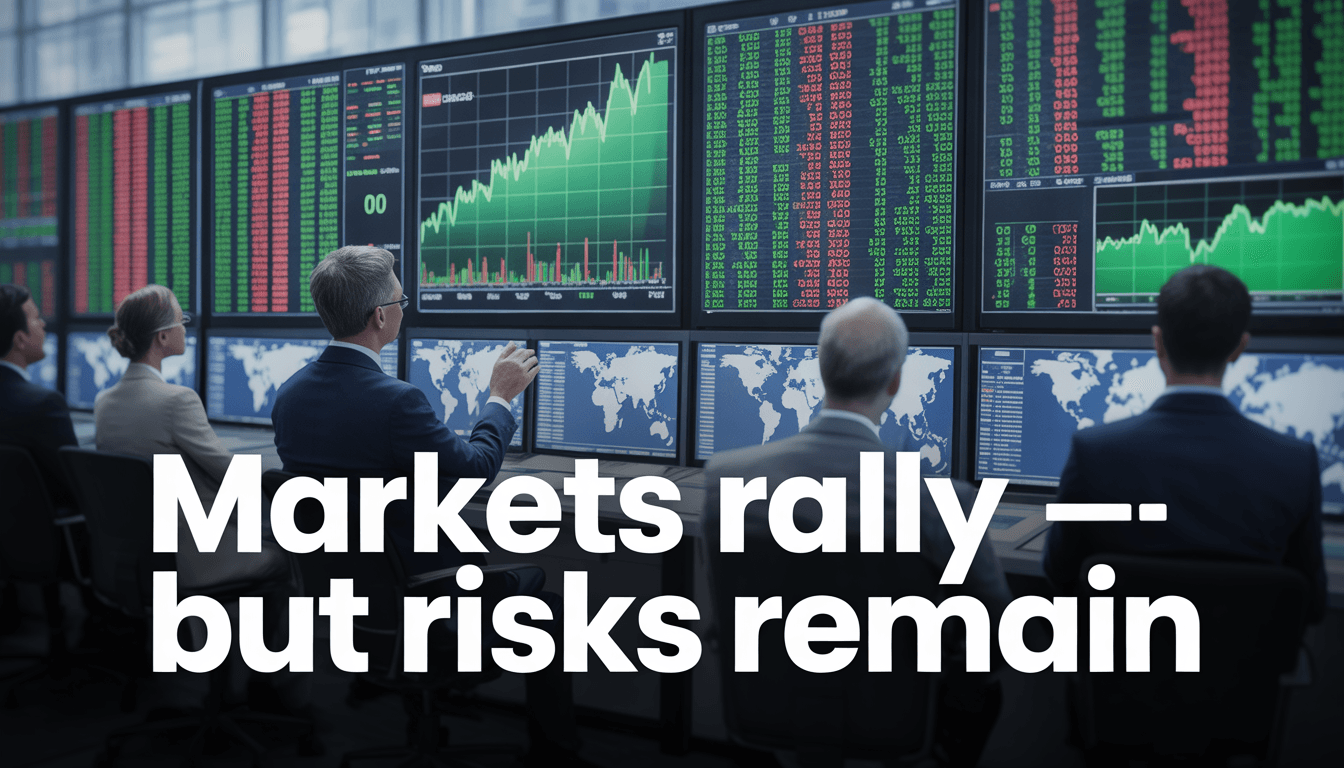
Global financial markets surged after the US Federal Reserve signaled that it may be nearing the end of its aggressive interest rate hike cycle. The announcement sparked optimism across stock markets, with investors welcoming the possibility of monetary policy stability after months of economic uncertainty. However, analysts caution that underlying risks remain despite the positive momentum.
The Fed’s latest statement marks a potential turning point for markets that have been under pressure from high inflation, rising borrowing costs, and slowing global growth.
Why the Fed’s Signal Matters
The US Federal Reserve plays a critical role in shaping global financial conditions. When interest rates rise, borrowing becomes more expensive, often slowing economic activity. By signaling a pause or end to rate hikes, the Fed has provided relief to investors who have been bracing for tighter financial conditions.
Markets interpreted the Fed’s comments as a sign that inflation may be coming under control, reducing the need for further aggressive action.
Stock Markets Respond With Strong Gains
Following the Fed’s announcement, major stock indices around the world posted notable gains. US equities led the rally, while European and Asian markets also climbed as investor confidence improved.
Technology stocks and growth-oriented sectors benefited the most, as lower interest rate expectations make future earnings more attractive. Emerging markets also saw renewed inflows as risk appetite increased.

Bond Yields and Currency Movements
Bond markets reacted quickly, with yields easing as expectations for further rate hikes declined. Lower yields tend to support equities by reducing competition from fixed-income investments.
Meanwhile, the US dollar weakened slightly against major currencies, reflecting reduced expectations of higher interest rates. This provided relief to global markets and economies that rely heavily on dollar-denominated debt.
What the Fed Actually Said
While the Fed did not explicitly declare an end to rate hikes, its language suggested that policymakers are becoming more cautious. Officials emphasized data-driven decision-making and acknowledged progress in controlling inflation.
This shift in tone was enough to spark optimism, even as the Fed reiterated its commitment to maintaining price stability.
Investor Optimism vs Economic Reality
Despite the rally, economists warn that the global economy still faces significant challenges. Inflation, while easing, remains above target levels in many countries. High interest rates continue to impact housing, manufacturing, and consumer spending.
Geopolitical tensions, supply chain disruptions, and slowing growth in major economies could still weigh on markets in the months ahead.
Impact on Global Economies
The Fed’s signal has implications far beyond the US. Central banks worldwide often adjust their policies based on US monetary decisions. A pause in US rate hikes could give other countries more flexibility to support growth.
Developing economies, in particular, may benefit from reduced pressure on currencies and capital flows.
Caution From Analysts and Policymakers
Market experts urge investors not to assume smooth sailing ahead. While the rally reflects optimism, history shows that markets can react sharply to new economic data or policy shifts.
Central banks are expected to remain cautious, balancing the need to control inflation with the risk of slowing economic growth too much.
What This Means for Investors
For investors, the Fed’s signal offers short-term relief but also calls for careful strategy. Diversification and risk management remain essential as markets adjust to changing expectations.
Long-term trends such as technological innovation, energy transition, and global demographics are likely to shape market performance beyond interest rate decisions.

A Rally Fueled by Hope, Not Certainty
The global markets rally highlights how sensitive investors are to signals from central banks. While the Fed’s message has boosted confidence, uncertainty remains about inflation, growth, and future policy moves.
As markets move forward, optimism and caution will likely continue to coexist.
❓ FAQs
Q1: Why did global markets rally after the Fed’s announcement?
Investors reacted positively to signals that US interest rate hikes may be ending, easing financial pressure.
Q2: Has the Fed officially ended rate hikes?
No, the Fed has only signaled caution and will make future decisions based on economic data.
Q3: How do rate hikes affect global markets?
Higher rates increase borrowing costs, often slowing economic growth and reducing investment.
Q4: What risks still remain for markets?
Inflation, geopolitical tensions, and economic slowdown risks continue to pose challenges.
Q5: Should investors expect markets to keep rising?
Markets may remain volatile, and gains depend on future economic data and policy decisions.