
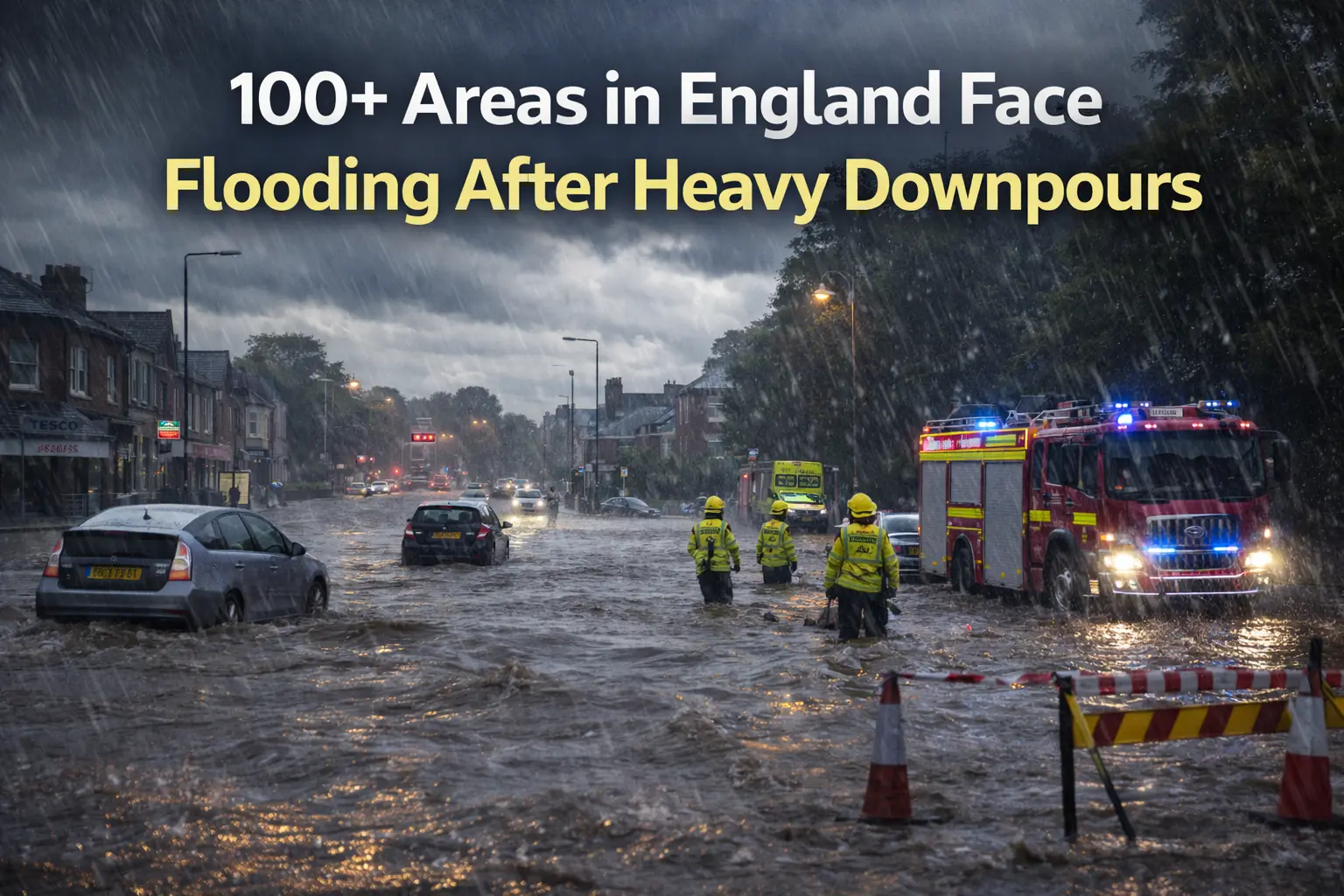
More Than 100 Areas in England Face Flooding After Heavy Downpours
More than 100 areas across England are currently facing flood alerts and flood warnings following days of heavy rainfall, with authorities warning that the situation could worsen as more rain is forecast later this week. According to meteorologists, a blocked weather pattern is preventing weather systems from moving on, leading to prolonged periods of rainfall over the same regions.
Emergency services, local councils, and the Environment Agency have urged residents in flood-prone areas to stay alert, prepare emergency plans, and closely monitor official weather updates.
What Is Causing the Flooding in England?
1. Heavy and Persistent Rainfall
Large parts of England have experienced above-average rainfall, saturating the ground and overwhelming drainage systems. When soil becomes fully saturated, even moderate rain can quickly lead to flooding.
2. Blocked Weather Pattern Explained
A blocked weather pattern occurs when high-pressure systems become stationary, effectively trapping low-pressure systems in place. In this case, it has caused rain clouds to remain over the UK for days instead of moving eastward.
This phenomenon is becoming more frequent and is often linked to changes in global atmospheric circulation, which scientists associate with climate change.
The Environment Agency has issued flood alerts affecting:
Southern England
Parts of the Midlands
South West England
Low-lying river basins
Urban areas prone to surface water flooding
Rivers such as the Severn, Thames, Trent, and Avon are being closely monitored as water levels continue to rise.
Impact on Communities and Infrastructure
Flooding has already led to:
Road closures and travel disruption
Delays to rail services
Flooded homes and businesses
Agricultural land damage
School closures in some local areas
Local authorities are deploying sandbags, flood barriers, and emergency response teams to protect vulnerable communities.
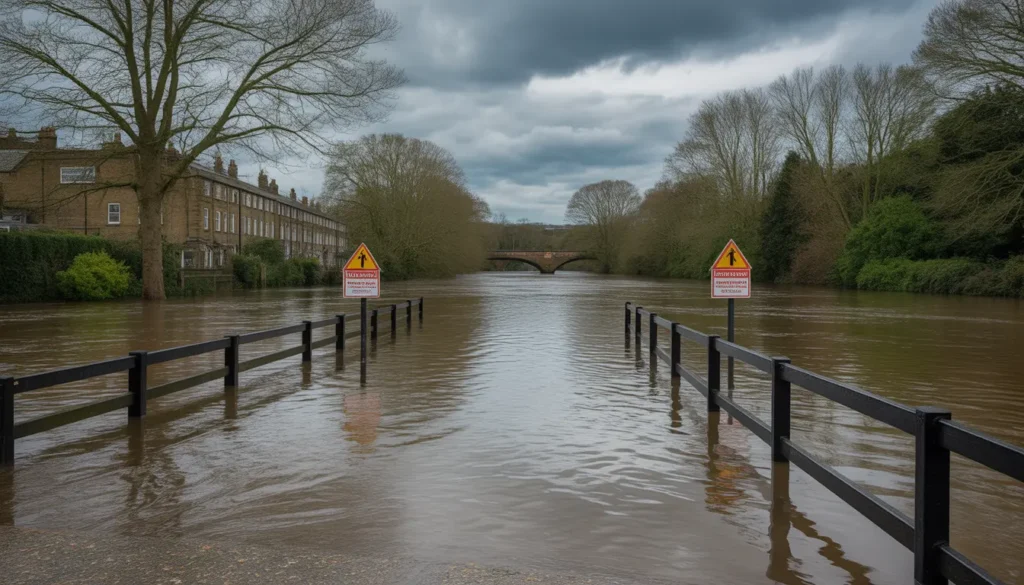
Weather Forecast: More Rain Expected This Week
According to the UK Met Office, further rain bands are expected to move across England in the coming days. While rainfall intensity may vary, the already saturated ground significantly increases flood risk.
Forecasters warn that even short bursts of heavy rain could cause rapid surface water flooding, particularly in towns and cities.
Government and Emergency Response
The UK government and emergency agencies are taking several measures:
Continuous river-level monitoring
Flood defence inspections
Public safety alerts
Coordination with local councils
Emergency accommodation for displaced residents
Residents are advised to check Environment Agency flood maps and sign up for real-time flood warnings.
How Climate Change Is Linked to UK Flooding
Experts say climate change is increasing the likelihood of extreme rainfall events. Warmer air holds more moisture, leading to heavier downpours when rain occurs.
Studies show that the UK is experiencing:
Wetter winters
More intense rainfall events
Increased flood frequency
Long-term adaptation strategies are now considered essential to protect infrastructure and communities.
Safety Advice for Residents
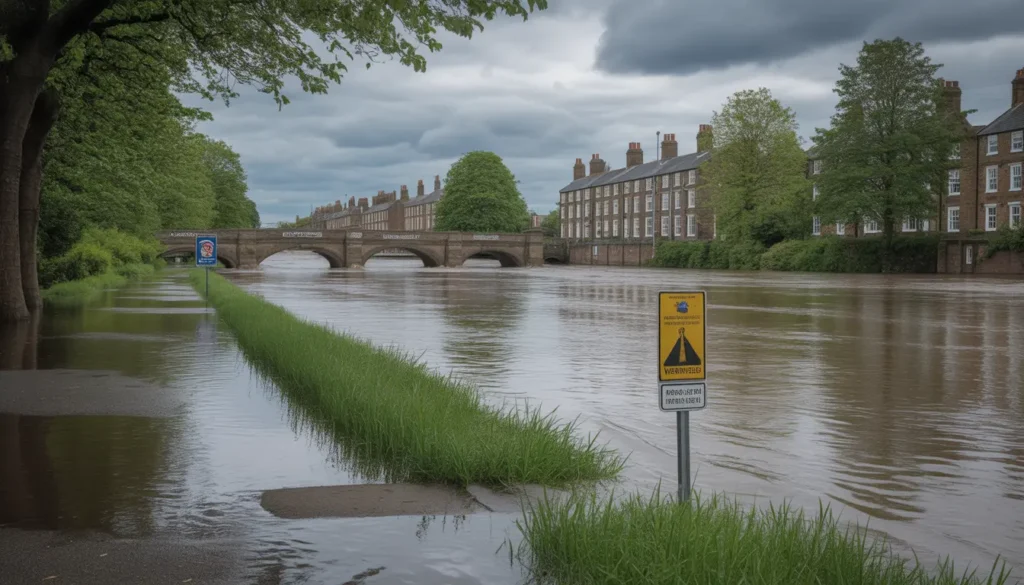
If you live in a flood-risk area:
Avoid walking or driving through floodwater
Keep valuables and electrical items elevated
Prepare an emergency kit
Follow advice from local authorities
Call emergency services if life is at risk
What Happens Next?
Authorities will reassess flood risks daily as weather conditions evolve. If rainfall persists, additional flood warnings may be issued.
Residents should remain vigilant throughout the week as the blocked weather pattern shows no immediate signs of breaking.
FAQs
How many areas in England are facing flood alerts?
More than 100 areas across England currently face flood alerts or warnings.
What is a blocked weather pattern?
It is a weather situation where atmospheric systems become stationary, causing prolonged rainfall or dry spells.
Is more rain expected in England this week?
Yes, the Met Office forecasts additional rainfall, increasing the risk of further flooding.
Which agency issues flood warnings in England?
The Environment Agency is responsible for issuing flood alerts and warnings.
Is climate change making floods worse in the UK?
Yes, scientists agree climate change is increasing rainfall intensity and flood risks.