
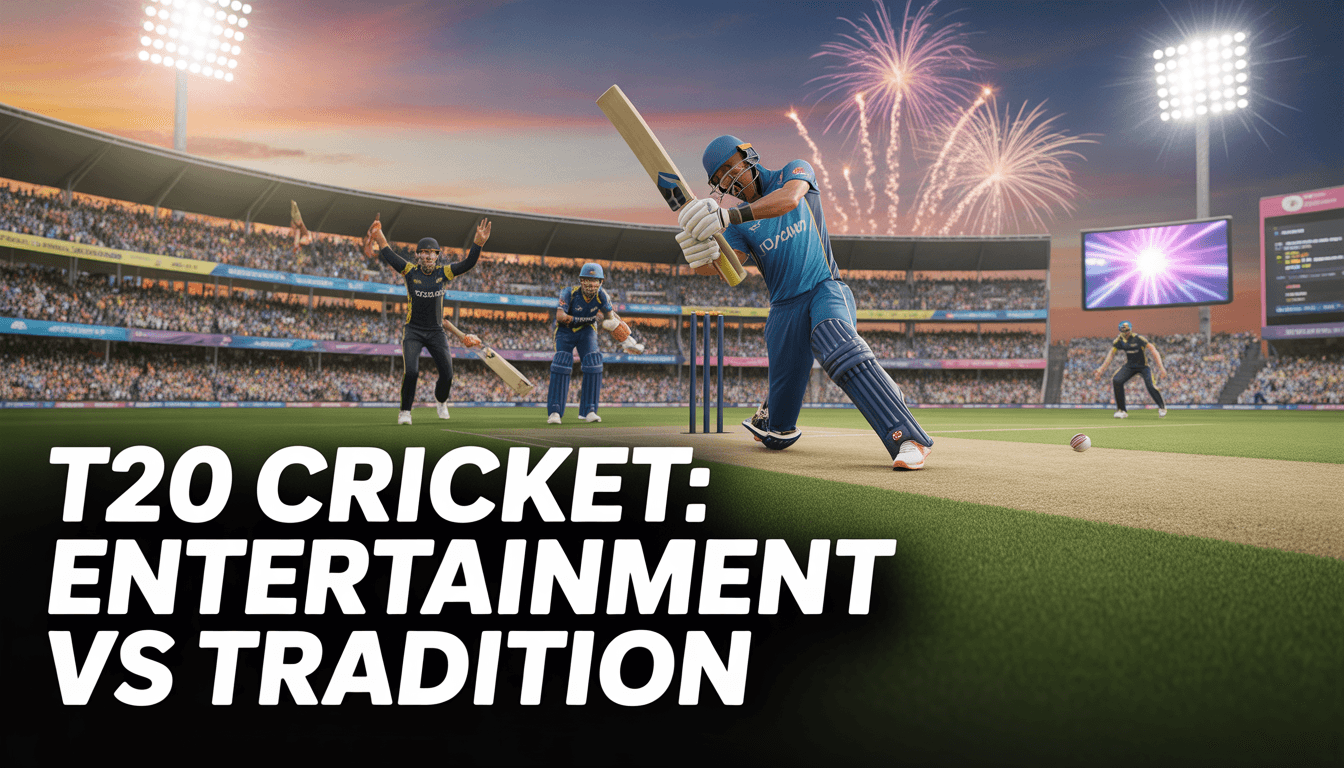
Cricket’s T20 has undergone a dramatic transformation over the past two decades, and no format has driven change more aggressively than Twenty20 (T20) cricket. Designed to deliver fast-paced action and instant excitement, T20 has revolutionized how the game is played, watched, and marketed. While the format has boosted entertainment and global appeal, critics argue that it has pushed cricket’s rich traditions into the background.
The rise of T20 represents both a triumph and a challenge for the sport.
The Birth of T20 Cricket
T20 cricket was introduced as a solution to declining stadium attendance and shrinking television audiences. Traditional formats, especially Test cricket, demanded long attention spans and multi-day commitments that struggled to compete with modern entertainment options.
By condensing matches into roughly three hours, T20 made cricket more accessible, especially for younger fans and new audiences unfamiliar with the sport’s complexities.
Entertainment Takes Center Stage
One of the defining features of T20 cricket is its emphasis on entertainment. Explosive batting, frequent boundaries, and dramatic finishes are central to the format’s appeal.
Stadiums now resemble entertainment hubs, featuring music, fireworks, cheer squads, and digital fan engagement. Broadcasters benefit from predictable match durations and high-scoring action, making T20 ideal for prime-time viewing.

Rise of Franchise Leagues
The growth of franchise-based T20 leagues has reshaped global cricket. These leagues attract international stars, generate massive revenue, and offer players lucrative career opportunities.
For fans, franchise cricket provides year-round entertainment and a chance to see top players from different countries compete together. However, the commercial success of these leagues has raised concerns about overcrowded calendars and player fatigue.
Changing Player Skill Sets
T20 cricket has also influenced how players train and perform. Batters prioritize power-hitting and innovative shots, while bowlers focus on variations and defensive strategies.
While these skills enhance excitement, critics argue that they come at the expense of patience, technique, and endurance—qualities traditionally associated with longer formats of the game.
Impact on Traditional Formats
As T20’s popularity grows, Test and One Day International cricket face increasing pressure. Scheduling conflicts, reduced attention spans, and financial incentives often push players to prioritize T20 leagues over international commitments.
Purists worry that the essence of cricket—strategic battles, long-form storytelling, and subtle skill—is being overshadowed by instant gratification.
Fans Divided Over the Evolution
The cricketing community remains divided. Many fans embrace T20 as a fresh, inclusive format that brings excitement and accessibility. Others fear the erosion of traditions that defined cricket for generations.
This divide reflects a broader debate about whether sports should evolve to match modern consumption habits or preserve their historical identity.
Commercial Growth and Global Reach
There is no denying T20’s role in expanding cricket’s global footprint. The format has introduced the game to new markets, increased sponsorship revenue, and boosted investment in grassroots development.
For emerging cricket nations, T20 offers a competitive pathway to the international stage, leveling the playing field against established powers.

Balancing Progress and Heritage
The challenge for cricket’s governing bodies lies in balancing innovation with preservation. While T20 drives growth and engagement, maintaining the relevance of traditional formats is essential for the sport’s long-term integrity.
Many experts argue that cricket’s strength lies in its diversity of formats, each offering a unique experience rather than competing for dominance.
The Future of Cricket
Cricket’s future will likely be shaped by how effectively it integrates entertainment with tradition. T20 is here to stay, but its influence must be managed to ensure the sport remains rich, diverse, and meaningful.
As cricket continues to evolve, the debate between entertainment and tradition will remain at the heart of the game.
❓ FAQs
Q1: Why has T20 cricket become so popular?
Its fast pace, entertainment value, and shorter match duration attract modern audiences.
Q2: Has T20 cricket harmed traditional formats?
Some believe it has reduced attention and resources for Test and ODI cricket.
Q3: Do players prefer T20 over other formats?
Many players enjoy T20 due to financial rewards and shorter schedules.
Q4: Can T20 and Test cricket coexist?
Yes, with balanced scheduling and strong governance, all formats can thrive.
Q5: What is the future of cricket formats?
Cricket is expected to continue offering multiple formats to cater to diverse audiences.
2 thoughts on “Cricket’s T20 Evolution Boosts Entertainment — but Tradition Takes a Back Seat”