
INTRODUCTION
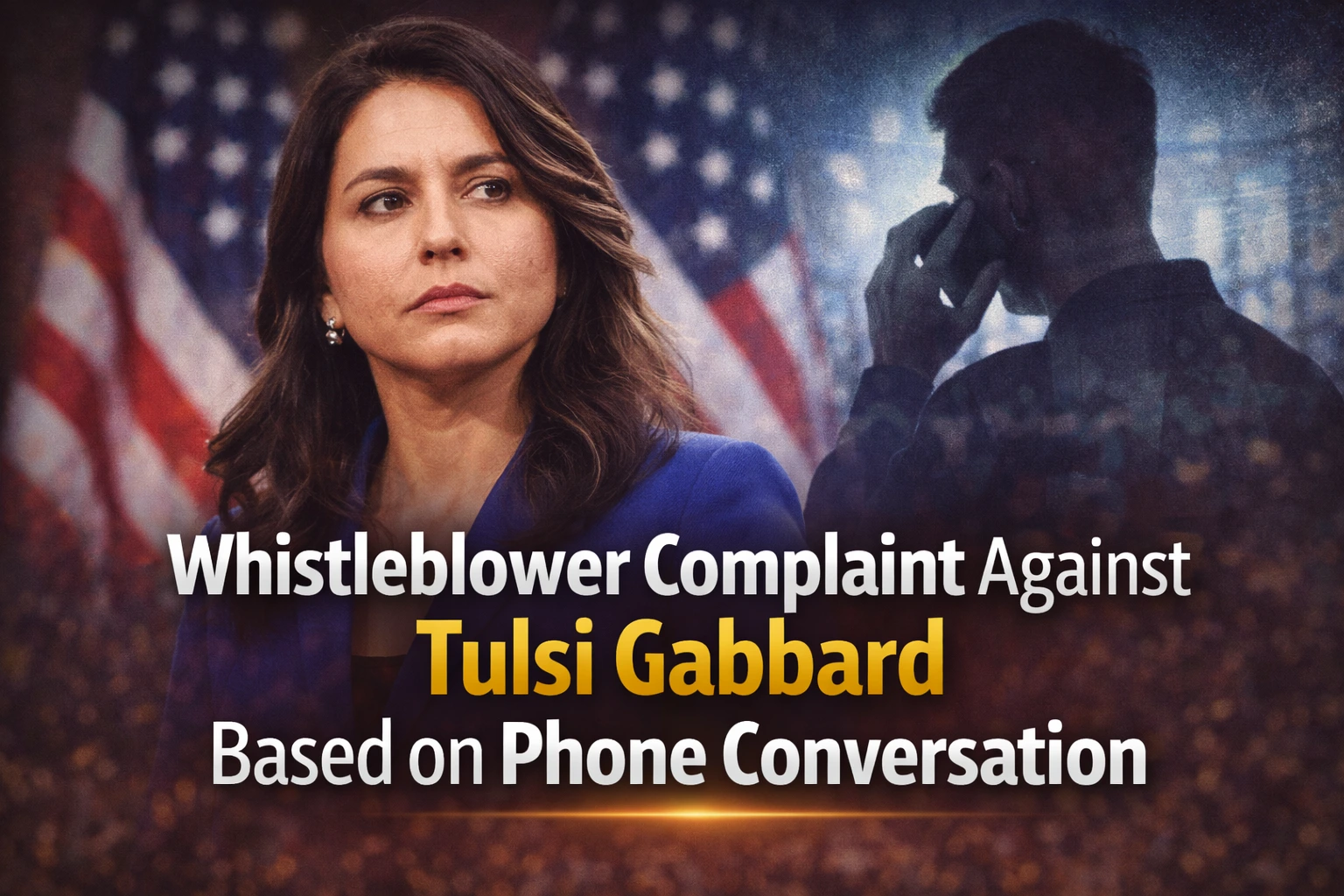
A high-profile classified whistleblower complaint involving U.S. Director of National Intelligence Tulsi Gabbard has become a major political flashpoint in Washington, with critics and lawmakers debating whether she improperly withheld and delayed the transfer of highly sensitive material to Congress. The complaint at the heart of the controversy stemmed from a phone call intercepted by the National Security Agency (NSA) — and allegations that Gabbard’s handling of that intelligence may have violated oversight rules
What the Complaint Is About
According to reports, the NSA detected an “unusual” phone conversation involving individuals linked to foreign intelligence and a person close to former President Donald Trump. Details remain classified, but the whistleblower claimed the call was significant and raised national security concerns.
Rather than having that intelligence widely distributed within the U.S. intelligence community, Gabbard reportedly took a paper copy of the memo to White House Chief of Staff Susie Wiles and instructed the NSA to send subsequent details only to her office, rather than disseminating it as is standard practice.
The whistleblower subsequently filed a formal complaint in May 2025, alleging that she blocked routine distribution of the intelligence for political purposes.
Timeline of the Complaint
Spring 2025: NSA intercepts a phone call involving foreign intelligence and a person close to Trump.
May 2025: Whistleblower files a formal complaint alleging Gabbard mishandled the intelligence.
June 2025: The inspector general at the time reportedly reviews the complaint but does not determine it to be “credible” or clear, and it remains classified.
Late 2025: The complaint is not initially shared with Congress despite statutory timelines; lawmakers only receive a redacted version months later.
Critics note that federal law generally requires that whistleblower complaints with potentially urgent concerns be transmitted to key congressional leaders — known as the “Gang of Eight” — within 21 days of filing. Critics including Senator Mark Warner argue that the long delay here violated protocol.

Tulsi Gabbard has strongly denied wrongdoing. She and her office assert that:
She never possessed or controlled the complaint in a way that would allow her to “hide” it.
Highly classified complaints are required to be stored securely, often in a safe, which she says is standard.
The initial inspector general review did not find the complaint “urgent and credible,” meaning the 21-day rule would not trigger.
She acted promptly once she was informed that secure guidance was necessary for transmitting the complaint to Congress.
In a lengthy statement on social media, Gabbard called the allegations “blatant lies” and accused Senator Warner and others of spreading misinformation for political gain.
Political and Congressional Reaction
Responses have split sharply along political lines:
Democratic critics like Senator Mark Warner have blasted the delay in transmitting the complaint, calling it a breach of legal obligations and raising questions about political interference.
Republican lawmakers such as Sen. Tom Cotton and others have backed Gabbard’s narrative, saying both inspectors general who reviewed the complaint concluded it was not credible and that its secure handling was appropriate.
Meanwhile, intelligence oversight committees have received redacted versions of the complaint, but much of its content remains classified because it involves highly sensitive intelligence.
Why This Matters
The controversy has highlighted several issues:
Whistleblower rights vs. national security protocols: Balancing the need for oversight with the protection of classified material is central to the dispute.
Timeline and legal requirements: Disputes over when and how complaints must be transmitted to Congress fuel the debate.
Political implications: Because the intelligence at issue allegedly references someone close to Donald Trump, both sides accuse the other of politicizing national security.
What Is Still Unknown
Key aspects of the complaint remain secret, including:
The full content of the intercepted phone call
The identity of the foreign intelligence actors involved
The specific nature of the threat or intelligence in question
These gaps mean the public and many lawmakers still do not have a clear picture of what was alleged and why Gabbard’s handling of it has become such a flashpoint.
Congressional intelligence committees may pursue further hearings or oversight actions depending on how the investigation develops, and lawmakers from both parties have expressed interest in clarifying the timeline and legal responsibilities related to whistleblower complaints within the intelligence community.
Bottom Line
A whistleblower complaint against Tulsi Gabbard — based on a classified phone conversation intercepted by the NSA — has stirred controversy over national security handling, political motives, and transparency. While Gabbard denies any misconduct and her office continues to insist procedures were followed, critics argue the delay in sharing the complaint with Congress shows deeper problems in intelligence oversight.
2 thoughts on “Whistleblower Complaint Against Tulsi Gabbard Based on Phone Conversation Sparks Politics and 0versight Fight”