
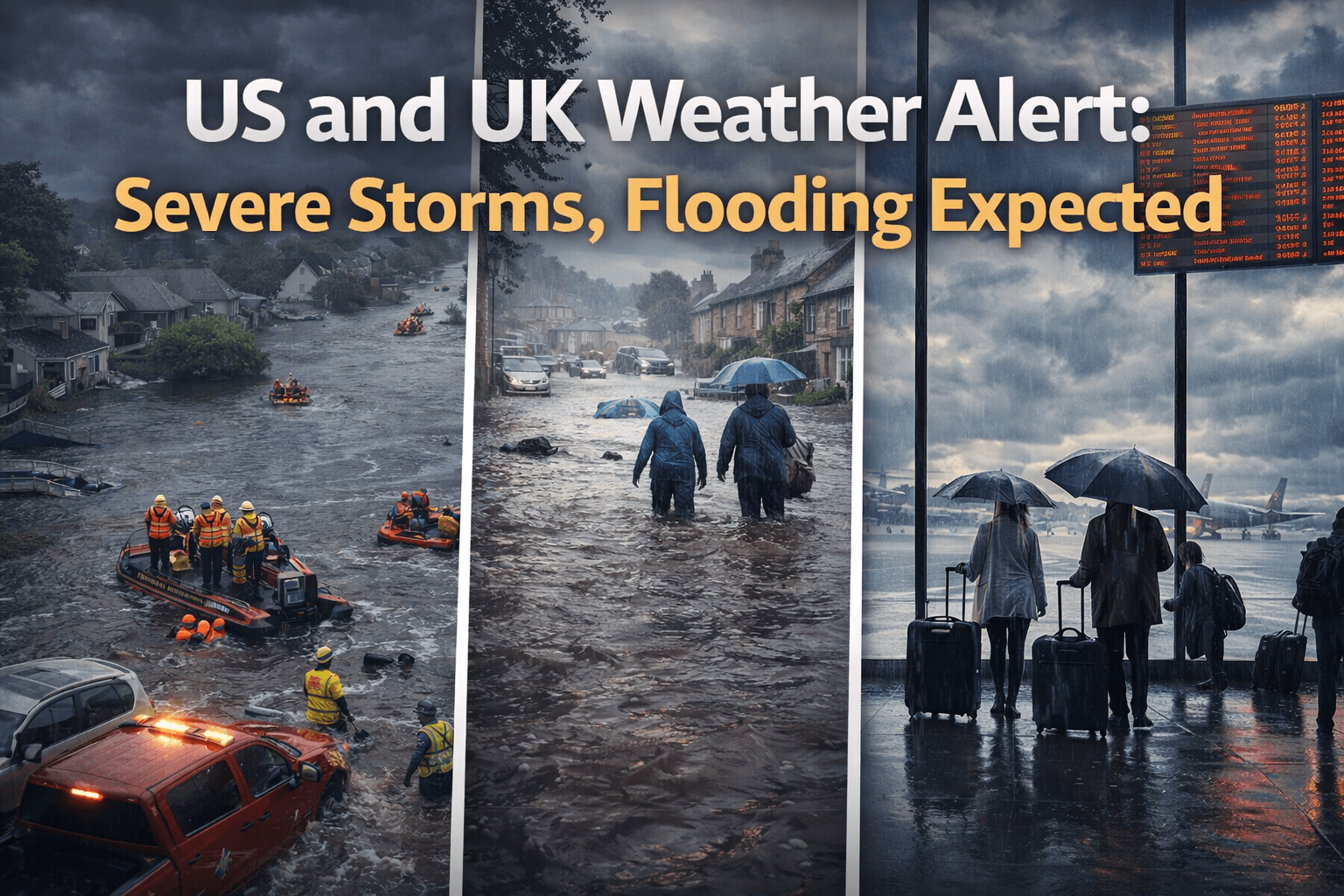
Residents in both the United States and the United Kingdom are bracing for an intense week of severe storms, flooding, and travel disruptions. Meteorologists have issued multiple warnings as heavy rainfall and high winds sweep across large regions.
Experts warn that this could be one of the most impactful weather events of the season, affecting transportation, infrastructure, and daily life for millions. From flash floods in urban areas to rural road closures, the public is urged to remain vigilant and follow official updates.
In this article, we provide a comprehensive, in-depth analysis of the storms, explain their regional impact, offer safety tips, and outline what the public should expect in the coming days.
Storms Across the United States 🇺🇸
Key Regions Under Alert
Meteorologists have highlighted several US states facing the highest risk:
-
Southeast: Florida, Georgia, Alabama – flash floods and coastal storms
-
Midwest: Illinois, Ohio, Indiana – heavy rainfall, river flooding
-
Northeast: New York, Pennsylvania – urban flooding, travel disruptions
The National Weather Service (NWS) has issued warnings for heavy rainfall exceeding 2–4 inches in certain areas, coupled with wind gusts of up to 60 mph. These conditions create hazards for commuters, school districts, and local authorities.
Historical Context
Comparing to previous storm events, this week’s systems resemble some of the 2019–2020 winter floods in terms of intensity and rainfall volume. Experts suggest that climate change is contributing to more frequent, high-intensity storms across the US.
Travel Impacts
-
Air Travel: Delays at major airports including Atlanta, Chicago O’Hare, and New York JFK
-
Road Travel: Flooded highways and bridges in urban areas
-
Public Transport: Train and bus cancellations due to waterlogged tracks and debris
Storms Across the United Kingdom 🇬🇧
Flood-Prone Areas
The UK Met Office has issued severe flood warnings for multiple counties, including:
-
Greater London and surrounding areas
-
South West England – rivers overflowing
-
Scotland – highland areas prone to flash flooding
Residents are advised to avoid travel unless essential, move vehicles to higher ground, and follow local council updates.
Impacts on Daily Life
-
Commuting: Train delays, road closures, and ferry cancellations
-
Schools: Potential closures due to unsafe travel
-
Events: Postponements of outdoor events and sports fixtures
Historical Comparison
This period mirrors the winter floods of 2015–2016, when persistent rainfall caused widespread disruption. Experts warn that urban drainage systems are under increasing pressure due to infrastructure limitations and heavier rainfall patterns.
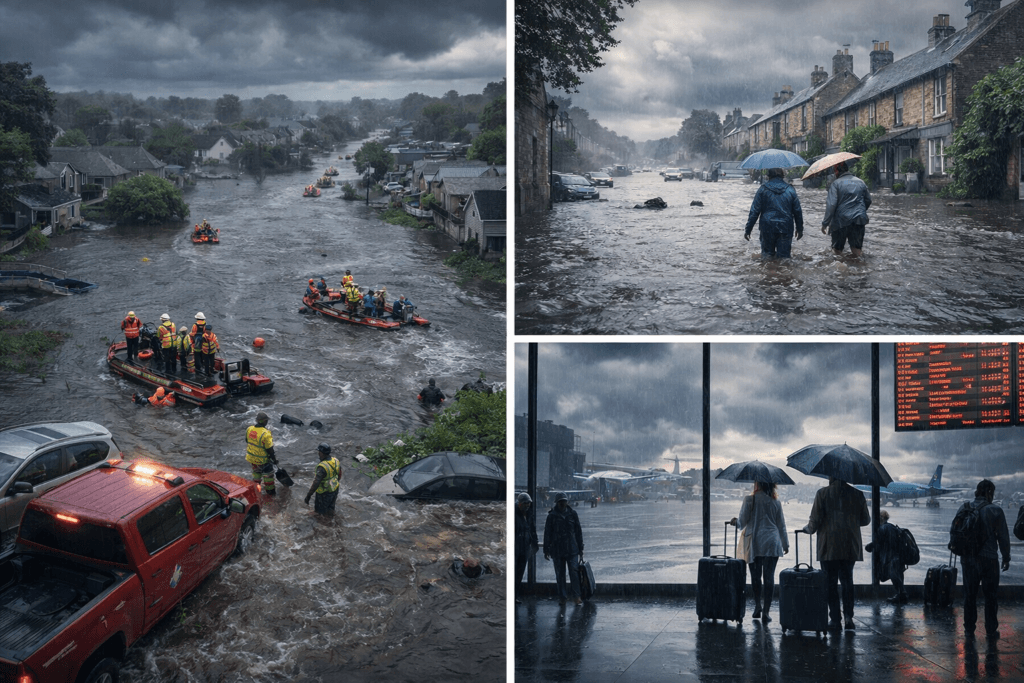
Humanitarian and Safety Concerns 🧯
Public Safety Tips
-
Avoid driving through flooded roads
-
Keep emergency kits ready with water, food, and first aid
-
Stay informed via NWS, Met Office, and local authorities
-
Follow evacuation orders promptly if issued
Emergency Response
-
UK: Local councils are deploying flood barriers, emergency rescue teams, and temporary shelters
-
US: FEMA and state-level emergency agencies are pre-positioning response units, sandbags, and relief supplies
Economic and Environmental Impacts 💸🌱
Energy and Fuel
Heavy storms often disrupt power lines, causing outages and affecting energy distribution. Fuel delivery can also be delayed, leading to higher petrol and diesel prices.
Agriculture
Farmers in both countries face crop damage, soil erosion, and livestock risk due to prolonged flooding.
Insurance
Homeowners and businesses may file claims for flood damage, potentially leading to higher premiums in affected regions.
-
Climate Change: Warmer air holds more moisture, increasing rainfall intensity
-
Blocked Weather Patterns: Persistent low-pressure systems trap storms over certain regions
-
Urbanization: Concrete and asphalt prevent natural drainage, worsening floods in cities
Experts note that the combination of global warming, urban development, and weather anomalies is creating increasingly severe events year after year.
Travel and Transport Disruptions 🚗✈️
Air Travel
-
Expect delays and cancellations at major airports
-
Airlines are advising passengers to check status before traveling
Road Travel
-
Flooded highways, washed-out bridges, and road closures
-
Emergency services warn against driving through standing water
Rail Travel
-
Train services in affected regions may be delayed due to track flooding and debris
Global and Local Reactions 🌍
US Authorities
-
NWS warnings and emergency alerts are sent nationwide
-
Local authorities advise citizens to stay home and prepare emergency kits
UK Authorities
-
Met Office issues red and amber warnings
-
Local councils deploy flood response teams and shelters
International Coverage
-
Media outlets across the globe are highlighting US-UK severe weather, emphasizing public safety and climate concerns.
Q1: Which areas are most at risk?
A1: Major metropolitan areas and low-lying regions in both the US and UK face the highest flooding risk.
Q2: How long will the storms last?
A2: Meteorologists predict storms could persist 3–5 days depending on weather system movement.
Q3: Are schools and public transport affected?
A3: Yes, many schools, trains, and buses may be delayed or closed due to unsafe conditions.
Q4: How can I stay safe?
A4: Follow official updates, avoid flooded areas, and have emergency supplies ready.
Conclusion: Stay Alert and Prepared 🛑🌧️
The US and UK are entering a critical weather phase with widespread storms and potential flooding. Residents are urged to remain vigilant, follow official warnings, and take precautionary measures.
While natural disasters cannot always be avoided, being informed, prepared, and cautious can reduce risks and protect lives and property.
Stay tuned for continuous updates as meteorologists track the storms and authorities respond across both nations.