
Introduction:
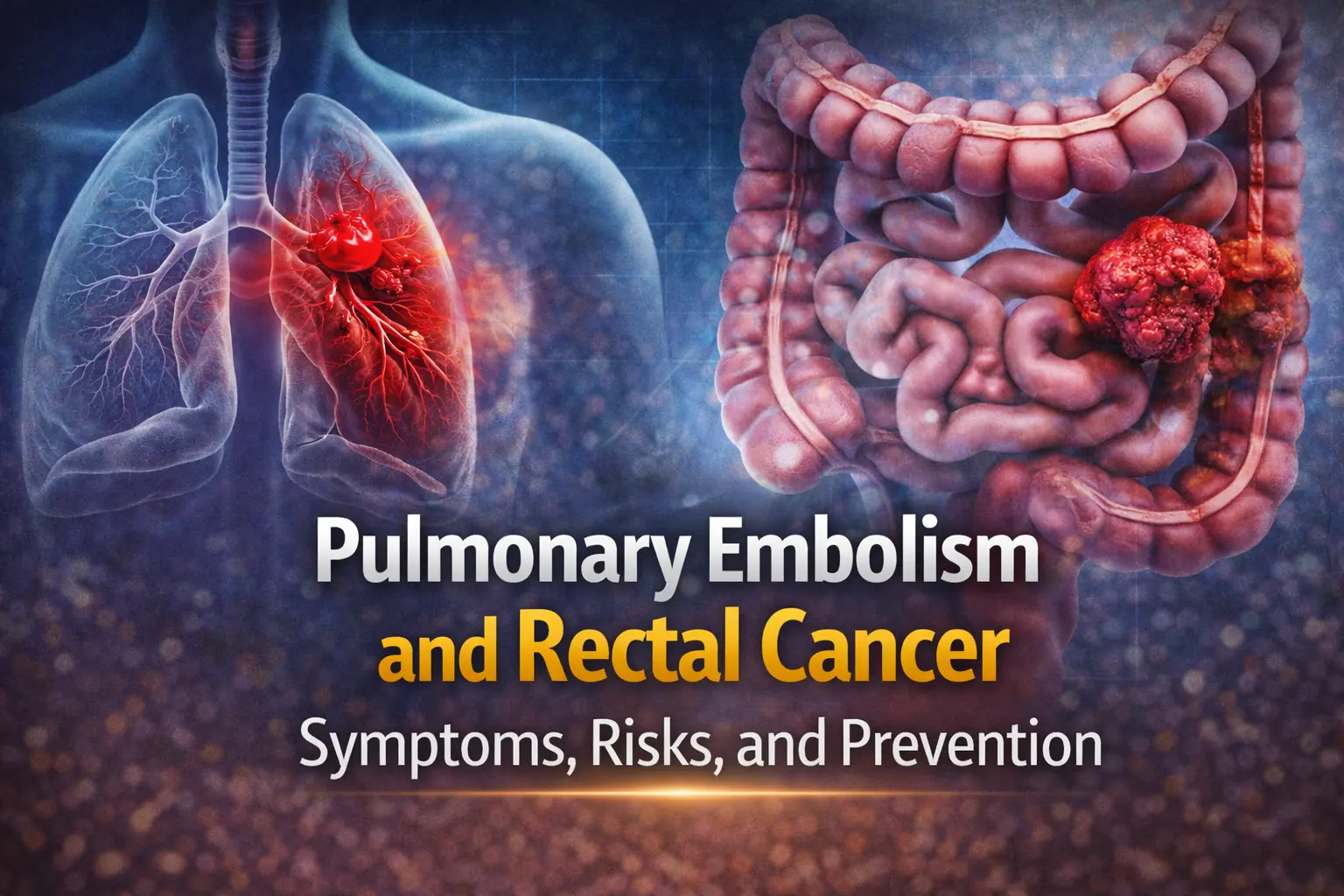
Pulmonary embolism is one of the most searched medical terms right now—and for good reason. Sudden deaths, cancer-related complications, and high-profile health discussions have pushed people to ask urgent questions like “what’s a pulmonary embolism?”, “is a pulmonary embolism a heart attack?”, and “how does a pulmonary embolism kill you?”
At the same time, rising searches around rectal cancer symptoms and pulmonary embolism with rectal cancer show growing public concern about how cancer increases life-threatening clot risks.
This guide explains pulmonary embolism in clear language, explores its connection to rectal cancer, and answers the most searched questions—without medical jargon.
What Is a Pulmonary Embolism?
A pulmonary embolism (PE) occurs when a blood clot blocks an artery in the lungs, preventing oxygen-rich blood from circulating properly.
Most pulmonary embolisms start as clots in the legs, known as deep vein thrombosis (DVT). When part of that clot breaks free and travels to the lungs, it becomes a pulmonary embolism.
In simple terms:
A pulmonary embolism is a sudden blockage in the lungs caused by a traveling blood clot.
What Causes a Pulmonary Embolism?
Common Causes
Long periods of inactivity (bed rest, long flights)
Surgery or hospitalization
Trauma or injury
Smoking
Obesity
Pregnancy
Hormone therapy or birth control pills
Medical & High-Risk Causes
Cancer (especially rectal cancer)
Chemotherapy
Genetic clotting disorders
Heart disease
Cancer patients are 4–7 times more likely to develop a pulmonary embolism than the general population.
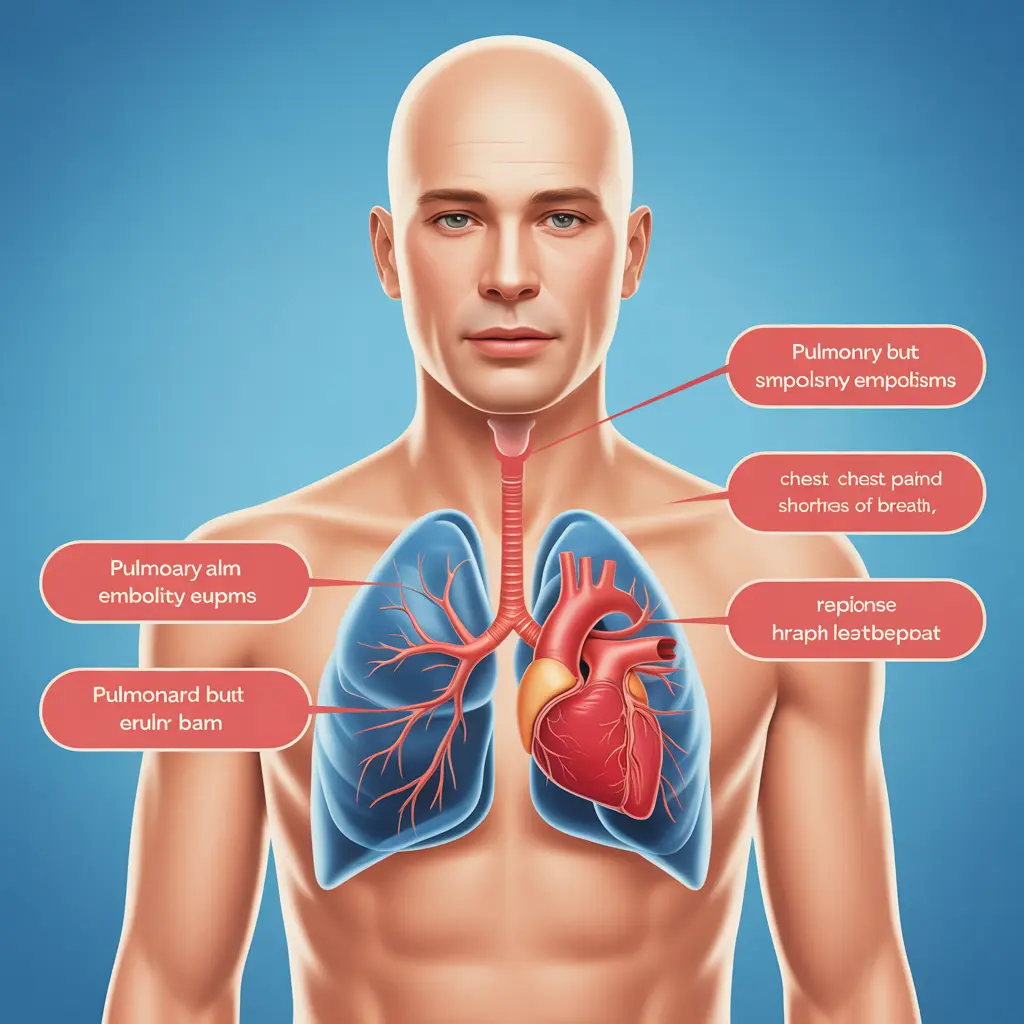
Pulmonary Embolism Symptoms (Early & Severe Signs)
Common Symptoms
Sudden shortness of breath
Sharp chest pain (worse when breathing deeply)
Rapid heartbeat
Coughing (sometimes with blood)
Dizziness or fainting
Is a Pulmonary Embolism Painful?
Yes. Many people report severe, stabbing chest pain that can feel alarming. Others may feel pressure rather than pain.
This is one of the most searched questions—and understandably so.
A pulmonary embolism can be fatal because it:
Blocks oxygen flow in the lungs
Strains the heart
Causes sudden heart failure or cardiac arrest
Large or untreated pulmonary embolisms can lead to sudden death within minutes to hours.
Is a Pulmonary Embolism a Heart Attack?
No—but the symptoms can feel similar.
| Pulmonary Embolism | Heart Attack |
|---|---|
| Blood clot in lungs | Blocked heart artery |
| Sudden breathing issues | Chest pressure spreading to arm/jaw |
| Oxygen deprivation | Heart muscle damage |
A pulmonary embolism affects the lungs, not the heart directly—though it can still cause heart failure.
How Do You Get a Pulmonary Embolism?
Most people develop a pulmonary embolism when:
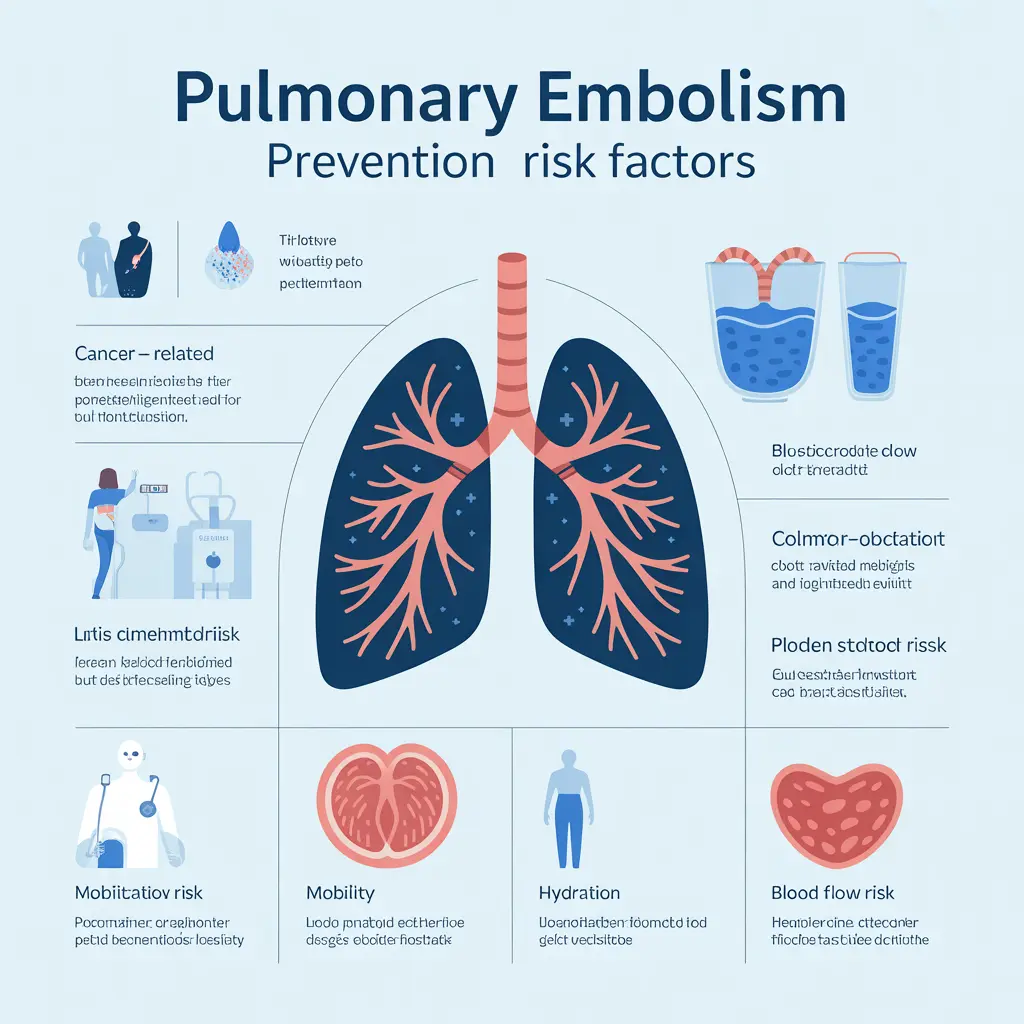
Blood flow slows (immobility)
Blood becomes thicker (cancer, dehydration)
Blood vessels are damaged (surgery, inflammation)
Cancer dramatically increases all three risks.
Rectal Cancer and Pulmonary Embolism: The Hidden Connection
Why Rectal Cancer Raises Pulmonary Embolism Risk
Rectal cancer increases clot risk due to:
Tumor-driven inflammation
Chemotherapy effects
Reduced mobility
Surgery to the pelvic area
Changes in blood-clotting proteins
This condition is often called cancer-associated thrombosis.
Rectal Cancer Symptoms to Watch For
Early detection matters.
Common Rectal Cancer Symptoms
Blood in stool
Persistent bowel changes
Rectal pain or pressure
Unexplained weight loss
Fatigue or anemia
When rectal cancer is present, doctors often monitor for pulmonary embolism symptoms proactively.
Pulmonary Embolism with Rectal Cancer: A Medical Emergency
Pulmonary embolism is one of the leading non-cancer causes of death in colorectal cancer patients.
Warning signs include:
Sudden breathlessness after cancer treatment
Chest pain following surgery
Leg swelling during chemotherapy
Early diagnosis saves lives.
Pulmonary Embolism Prevention
General Prevention
Stay active
Walk during long travel
Maintain hydration
Avoid smoking
For Cancer Patients
Blood-thinning medications
Compression stockings
Early mobility after surgery
Regular clot screening
Prevention is especially critical for rectal cancer patients.
When to Seek Emergency Help
Call emergency services immediately if you experience:
Sudden chest pain
Difficulty breathing
Collapse or fainting
Coughing up blood
A pulmonary embolism is treatable—but only if caught early.
What’s a pulmonary embolism?
A pulmonary embolism is a blood clot that travels to and blocks arteries in the lungs.
Is a pulmonary embolism a heart attack?
No. It affects the lungs, not the heart, though symptoms can overlap.
How painful is a pulmonary embolism?
Pain ranges from sharp chest pain to intense pressure, often worsened by breathing.
What causes a pulmonary embolism in cancer patients?
Cancer changes blood chemistry, increases inflammation, and reduces mobility—raising clot risk.
Can rectal cancer cause pulmonary embolism?
Yes. Rectal cancer significantly increases pulmonary embolism risk, especially during treatment.
How can pulmonary embolism be prevented?
Movement, hydration, blood thinners, and medical monitoring reduce risk.
Conclusion: Why Awareness Saves Lives
Pulmonary embolism is fast, silent, and deadly—but also preventable and treatable.
Understanding:
What pulmonary embolism is
How rectal cancer increases risk
Which symptoms demand urgent care
can mean the difference between life and death.
If you or someone you care for has cancer or unexplained breathing symptoms, never ignore the signs.
1 thought on “Pulmonary Embolism Explained: Symptoms, Causes, Prevention & Link t0 Rectal Cancer”