

Introduction
As the world races to combat climate change, green hydrogen has emerged as one of the most promising clean energy solutions of the decade. Produced using renewable electricity and water, green hydrogen offers a zero-carbon fuel alternative capable of transforming industries, transportation, and global energy systems.
What Is Green Hydrogen?
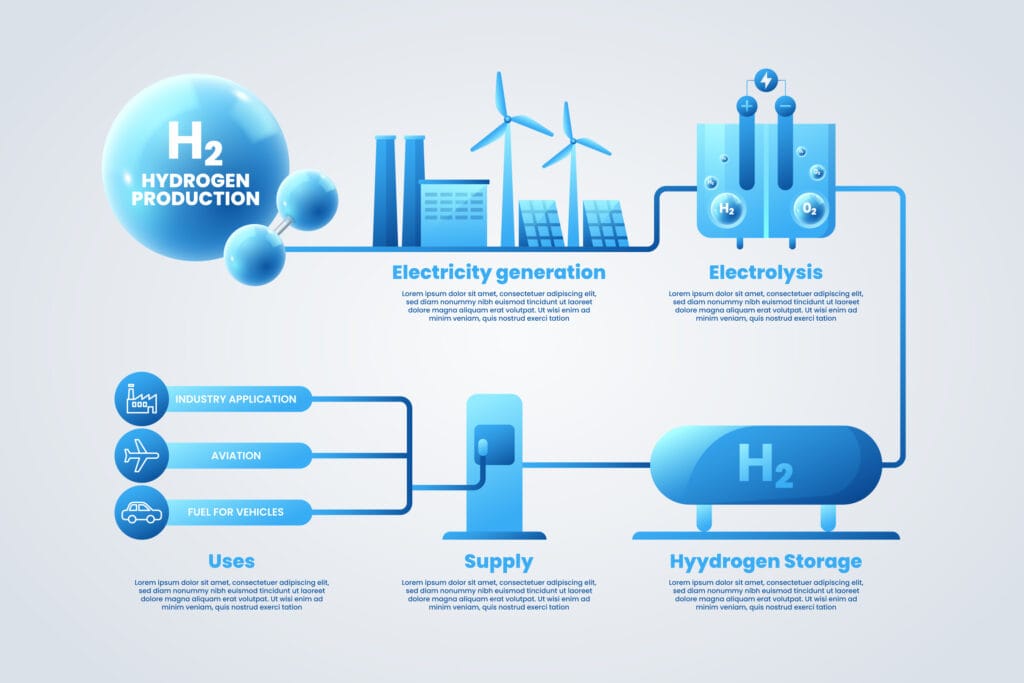
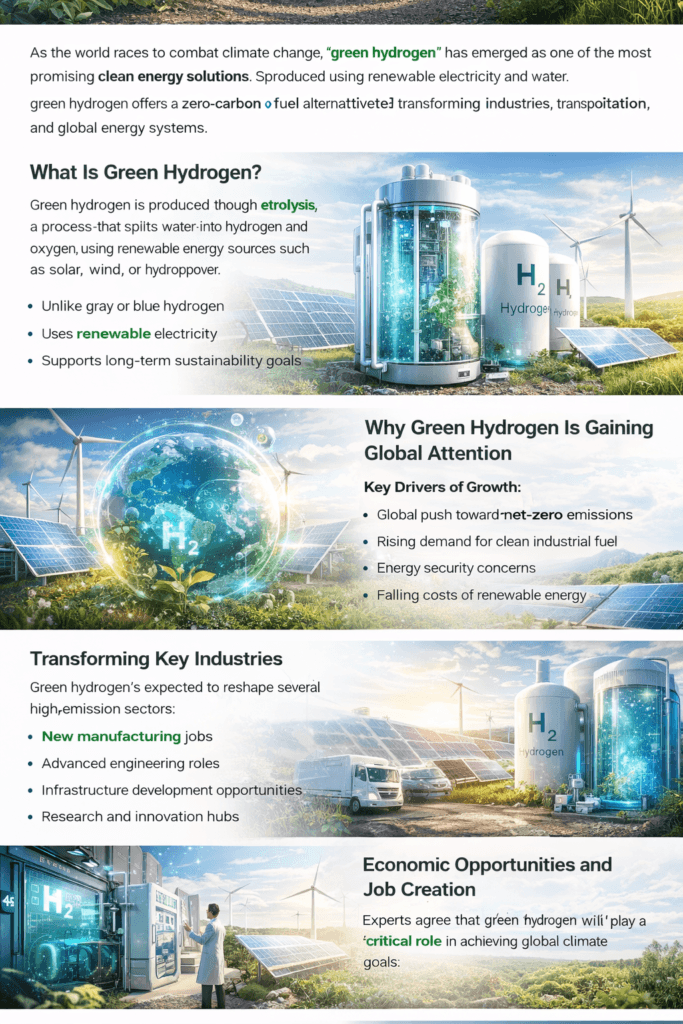
Green hydrogen is produced through electrolysis, a process that splits water into hydrogen and oxygen using renewable energy sources such as solar, wind, or hydropower.
Unlike gray or blue hydrogen, green hydrogen:
Emits no carbon dioxide
Uses renewable electricity
Supports long-term sustainability goals
This makes it one of the cleanest fuels available today.
Why Green Hydrogen Is Gaining Global Attention
Global push toward net-zero emissions
Rising demand for clean industrial fuel
Energy security concerns
Falling costs of renewable energy
Countries across Europe, Asia, and the Middle East have launched national hydrogen strategies, positioning green hydrogen as a strategic energy asset.

Transforming Key Industries
Green hydrogen is expected to reshape several high-emission sectors:
🏭 Heavy Industry
Steel, cement, and chemical manufacturing are adopting hydrogen to replace fossil fuels in high-temperature processes.
🚢 Transportation
Hydrogen-powered ships, trains, trucks, and even aviation projects are moving from pilot stages to commercial deployment.
⚡ Energy Storage
Green hydrogen can store surplus renewable energy, solving the challenge of intermittent solar and wind power.

The green hydrogen economy is creating:
New manufacturing jobs
Advanced engineering roles
Infrastructure development opportunities
Research and innovation hubs
Analysts predict the sector could generate millions of jobs globally by 2030.
Challenges Slowing Adoption
Despite its potential, green hydrogen faces hurdles:
High production costs
Limited infrastructure
Energy efficiency losses
Need for large-scale electrolyzer deployment
However, ongoing innovation and government incentives are rapidly addressing these challenges.

Experts agree that green hydrogen will play a critical role in achieving global climate goals. As technology advances and costs decline, adoption is expected to accelerate across continents.
The next decade will determine whether green hydrogen becomes a niche solution—or the backbone of a clean energy future.
Conclusion
Green hydrogen represents more than just an alternative fuel—it symbolizes a fundamental shift toward sustainable energy systems. With strong policy support, technological innovation, and growing global demand, green hydrogen is set to fuel a cleaner, more resilient tomorrow.

1 thought on “Green Hydrogen: Fueling a Sustainable Tomorrow”