
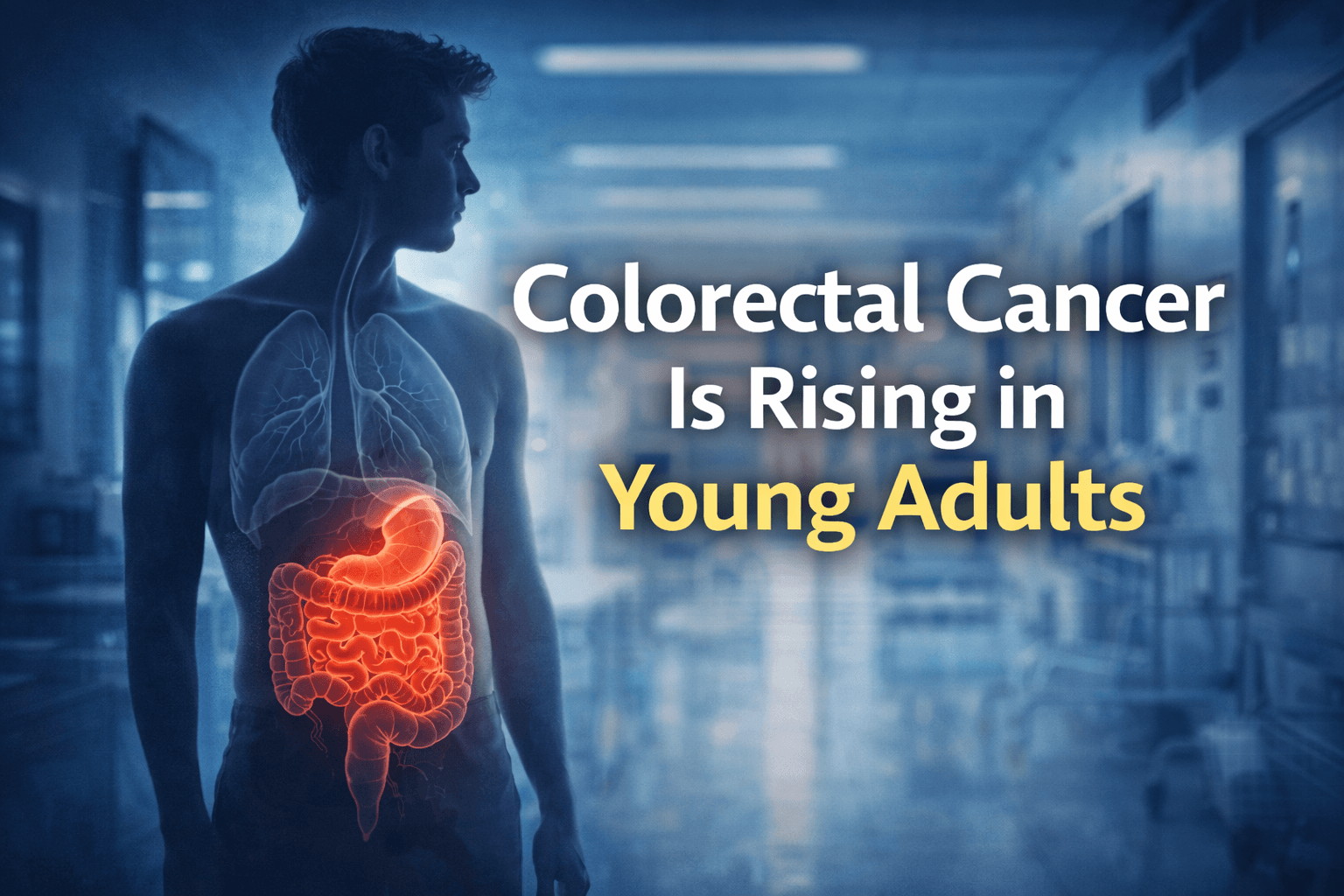
Introduction: A Cancer Doctors Didn’t Expect 🚨
Colorectal cancer was once considered a disease of older adults. Today, that assumption is dangerously outdated. Across the US and UK, doctors are reporting a sharp and alarming rise in colorectal cancer among people under 50 — including patients in their 20s and 30s.
What makes this trend especially concerning is that many younger patients are diagnosed late, often after symptoms were dismissed as stress, diet issues, or minor digestive problems.
Medical experts now warn that colorectal cancer is becoming a silent epidemic among younger generations — one that demands urgent awareness.
What Is Colorectal Cancer? 🧬
Colorectal cancer begins in the colon or rectum, part of the large intestine. It usually starts as benign polyps that gradually become cancerous.
There are two main types:
-
Colon cancer
-
Rectal cancer
Early detection dramatically improves survival rates — but only if symptoms are recognized early.
Why Are Young Adults at Higher Risk Now? 📈
Researchers are still investigating, but several factors are strongly linked to the rise:
1️⃣ Diet Changes 🍔
Ultra-processed foods, sugary drinks, and low fiber intake are major contributors.
2️⃣ Sedentary Lifestyles 🪑
Long hours sitting at desks or screens slow digestion and increase inflammation.
3️⃣ Obesity and Metabolic Health ⚖️
Higher body weight significantly increases colorectal cancer risk.
4️⃣ Gut Microbiome Changes 🦠
Modern diets and antibiotics alter gut bacteria in ways linked to cancer.

Early Warning Signs You Should Never Ignore ❗
Many young patients ignored early symptoms — often because cancer “didn’t seem possible.”
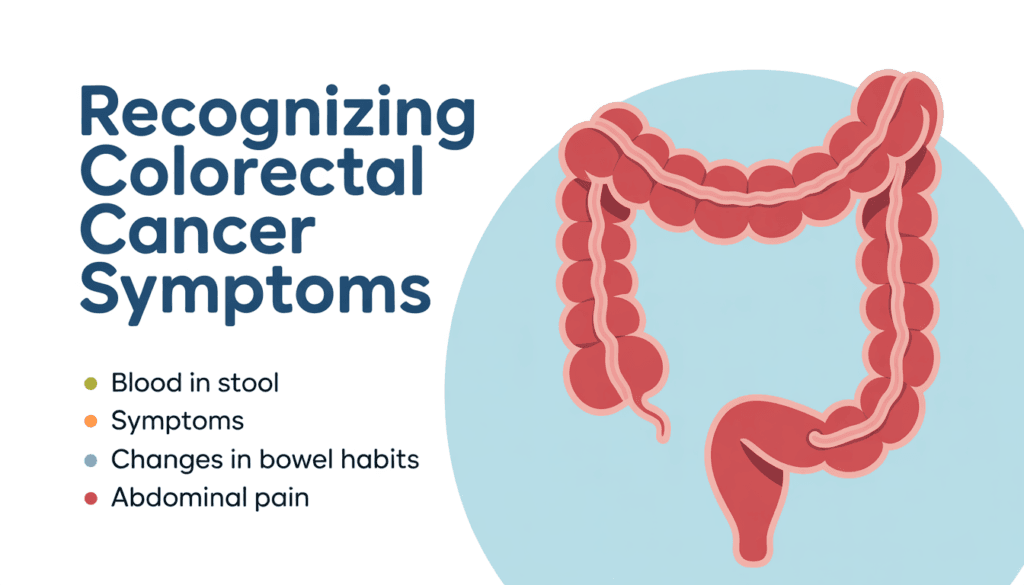
Common symptoms include:
-
Persistent abdominal pain
-
Blood in stool 🚨
-
Unexplained weight loss
-
Chronic diarrhea or constipation
-
Fatigue and anemia
⚠️ Doctors stress: If symptoms last more than 2–3 weeks, seek medical advice.
Why Diagnosis Is Often Delayed ⏳
Younger patients face unique barriers:
-
Doctors assume low cancer risk
-
Symptoms mistaken for IBS or hemorrhoids
-
Screening typically starts at age 45+
This delay allows cancer to progress to later stages before detection.
Diagnosis and Screening 🧪
Doctors use:
-
Colonoscopy
-
Stool tests
-
CT scans
-
Biopsy confirmation
Health authorities including the World Health Organization stress earlier screening for high-risk individuals.
Treatment Options Explained 💊
Treatment depends on stage and location:
-
Surgery
-
Chemotherapy
-
Radiation therapy
-
Targeted therapies
Survival rates exceed 90% when caught early — but drop sharply in advanced stages.
Emotional and Mental Health Impact 🧠💔
A cancer diagnosis at a young age affects:
-
Careers
-
Fertility
-
Mental health
-
Family planning
Support networks and counseling are now considered essential parts of care.
Prevention: What You Can Do Today ✅
Evidence-based prevention tips:
-
Eat high-fiber foods 🥦
-
Limit processed meat
-
Exercise regularly
-
Maintain healthy weight
-
Don’t ignore symptoms
Lifestyle changes can significantly reduce risk.
Why Awareness Campaigns Matter 📢
Public health experts argue that:
-
Screening ages should be lowered
-
Symptoms education must improve
-
Doctors must take young patients seriously
Early awareness saves lives.
FAQs ❓
Is colorectal cancer common in young adults?
It is increasing rapidly, though still less common than in older adults.
Does family history matter?
Many experts now recommend starting at age 45, or earlier for high-risk individuals.
nedct2
0my6gg